Guests
2
AboutContact UsMy bookings
Guests
2
AboutContact UsMy bookings

Chongqing Travel Themes

Private Chongqing tours with local guides|Chongqing food tours for hotpot, noodles and street eats|Chongqing walking tours through old streets and local neighborhoods|Chongqing night tours for skyline views, hotpot and neon streets|Chongqing 240-hour visa-free itinerary

Explore Chongqing

Top 10 Hot Pot Restaurants in Chongqing: A Local Travel & Dining Guide|Chongqing Street Food Guide | 10 Local Snacks Loved by Residents|Ciqikou Ancient Town Travel Guide: What to See, Do & Know Before You Visit|7 Best Vegetarian Restaurants in Chongqing: From Vegan Hot Pot to Temple Dining|Halal Food in Chongqing: A Guide for Muslim Travelers|Wulong Day Trip from Chongqing: Is It Worth It?|Do You Need a Private Car in Chongqing? Metro, Taxi vs Private Driver|Do You Need a Tour Guide in Chongqing? When a Guide Is Actually Worth It|Chengdu vs Chongqing: Which One Should You Visit?|How Many Days Do You Need in Chongqing? 1, 2, 3, 4 or 5 Days Explained|SHUA Bar Chongqing: High-Altitude Night Views at Raffles City|Xiyue Hezi Chongqing: A Chinese Tea & Dessert Experience in Xiahaoli

Popular Tours in Chongqing

Chongqing Walking Tour - Local Neighborhoods|Chongqing Cyber City in 1 Day|Chongqing Custom Tour|Chongqing Walking Tour - Downtown Unlocked|Wulong Three Natural Bridges + 1 Extra Spot|Cold War Legacy: 816 Nuclear Project & Abandoned Top-Secret Military Town|Chongqing Food Tour: Hidden Alleys & Trendy Malls|Dazu Rock Carvings|All the Chongqing Cyberpunk Nightviews in 3 Hours|Chongqing Local Life: Market, Hot pot, Tea House & Mahjong|Chongqing Cooking Class:Authentic Sichuan Cuisine &Market Visit |Urban Viral Spots Portrait Photography Tour

Popular Destinations

Chongqing Travel|Hangzhou Travel|Shenzhen&Guangzhou Travel|Chengdu Travel|Shanghai Travel|Zhangjiajie Travel|Guizhou Travel|Yunnan Travel|Xi'an Travel|Beijing Travel|Suzhou Travel|Jingmai Mountain, Pu'er Travel

Trending Tours

The Diversity of Chengdu:Subculture, Migration and Indie Art|The Bund's Great Game: A Saga from Suzhou Creek to Skyline|Art, History & Food Walk in Old & New Former French Concession|Art & Science of Chinese Tea: A Central Premium Hands-On Workshop|Xishuangbanna Naka Rainforest Trek: Stream Hiking & Jungle Adventure|Chengdu After Dark: Bike Tour, Night Market & Light Shows|Chengdu Food & Culture Tour: Market, Tea & Calligraphy|Xi’an City Highlights One-Day Tour|Xi’an Terracotta Warriors One-Day Tour|Beijing Mutianyu Great Wall One-Day Tour|Beijing Classic One-Day Tour: Tiananmen Square, Forbidden City & Jingshan Park|Chengdu Iconic Food Tour: Local Favorites Beyond Tourist Spots
AboutContact UsJoin Us
Privacy PolicyTerms of Service

© 2026 Chongqing Dongyou Xiguang Culture and Tourism Co., Ltd.(重庆东游西逛文旅有限公司)

←
Homepage/Chongqing/Chongqing Auditorium: A Complete Visitor Guide for International Travelers

Chongqing Auditorium: A Complete Visitor Guide for International Travelers

Chongqing Auditorium, also known as the People’s Auditorium, is one of Chongqing’s top landmarks. Learn about its history, architecture, opening hours, tickets, and tips for first-time visitors.
ByGuoer·UpdatedOctober 30, 2026
Chongqing Auditorium: A Complete Visitor Guide for International TravelersAll photos (4)

Introduction

For anyone visiting Chongqing, one building immediately stands out against the modern skyline—the Chongqing Auditorium. Known officially as the People’s Auditorium of Chongqing (重庆人民大礼堂), this landmark combines traditional Chinese design with modern engineering and serves as a cultural and political hub. With its striking green dome, red walls, and massive scale, it is one of the most photographed attractions in the city.

For overseas visitors, the Chongqing Auditorium offers not only a glimpse into Chinese architecture but also a living connection to the city’s modern history. This guide will give you everything you need to know—basic travel tips, history, architecture highlights, and visiting advice—to make your trip worthwhile.

1.Basic Information and Practical Tips

The Chongqing Auditorium sits in Yuzhong District, a central area that also hosts several other cultural landmarks.

Address: No. 173 Renmin Road, Yuzhong District, Chongqing

Transport: The most convenient option is Metro Line 10, getting off at Auditorium Station (大礼堂站). From there, it’s less than a 5-minute walk.

Opening Hours: 08:00 – 18:00 (last ticket sale at 17:30)

Tickets: 8 RMB per person(If you want to get in). Foreign tourists must present their passports when buying tickets at the onsite counter.

The entrance leads to a vast public square. From here, you’ll walk up steps toward the main hall, which gives you the perfect angle for panoramic photos.

Travel Tip: Try to arrive before 4:30 PM to ensure you have enough time to explore the interior before the ticket window closes. In the evening, the building is beautifully lit, making it a favorite nighttime photography spot.

Chongqing Auditorium: A Complete Visitor Guide for International Travelers travel scene 1

2.Historical Background of Chongqing Auditorium

The origins of the Chongqing Auditorium date back to a key period in modern Chinese history.

Construction: In 1950, Chongqing became the administrative hub for the Southwest region. To meet the demand for large-scale conferences, education campaigns, and public gatherings, the government launched the construction of a grand auditorium in 1951.

Completion: By April 1954, the building was finished and named the “Southwest Administrative Committee Auditorium.” Two years later, in 1956, it was renamed the People’s Auditorium of Chongqing, the title it still holds today.

Over the decades, the auditorium has hosted political meetings, cultural festivals, music performances, and community events. For many locals, it symbolizes the city’s resilience and cultural spirit during China’s early development years.

Why this matters for visitors: Knowing the background allows tourists to see beyond the red walls and green dome—it is a landmark that reflects Chongqing’s identity and growth after World War II and the founding of the People’s Republic of China.

Chongqing Auditorium: A Complete Visitor Guide for International Travelers travel scene 2

3.Architectural Features and Cultural Significance

Fusion of Styles

Chinese Palace Aesthetics: The layout follows the style of Ming and Qing dynasty palaces, with a symmetrical axis, tiered roofs, and bright red-and-green contrasts.

Western Influence: The auditorium also adopts Western structural techniques, most notably in its grand dome, which allows for a vast indoor space without supporting pillars.

Impressive Scale

Total area: 33,600 m²

Height: 65 meters (main structure 55 m)

Central Hall: Diameter of 46.33 m

Seating Capacity: 3,388 seats, making it one of the largest auditoriums in China

Standing in front of the building, many foreign visitors compare it to Beijing’s Temple of Heaven, though the Chongqing version is unique in its mix of regional architecture and modern engineering.

Cultural Value

One of Chongqing’s Top 10 Cultural Symbols

A landmark of local memory, where generations have celebrated important events

A popular venue for performances and cultural exchanges

For overseas tourists, visiting the Chongqing Auditorium is like stepping into a living museum of architecture and culture.

Chongqing Auditorium: A Complete Visitor Guide for International Travelers travel scene 3

4.Visiting Experience: What to Expect and How to Enjoy It

Best Times to Visit

Morning: Clear skies and softer crowds, ideal for photography

Afternoon: Explore the interior before the last ticket sales at 17:30

Evening: The auditorium lights up after sunset, creating a stunning night view

Things to Do

1.Photography – Take pictures from the square, the steps, and different angles around the dome.

2.Interior Visit – Step inside to admire the central hall. If you’re lucky, you may catch a rehearsal or performance.

3.Combine with Nearby Attractions:

Three Gorges Museum (right across the square, free entry, excellent for history lovers)

Jiefangbei Pedestrian Street (10–15 minutes by car, great for shopping and dining)

Hongya Cave (a must-see at night, about 15 minutes by taxi)

Traveler Tips

Bring your passport to purchase tickets.

Allow at least 1–1.5 hours to explore both the auditorium and its square.

If traveling with children or elderly visitors, note that the steps may be tiring—wear comfortable shoes.

For night photography, use a tripod or a smartphone with night mode.

Chongqing Auditorium: A Complete Visitor Guide for International Travelers travel scene 4

Local experiences

Tours that pair well with this guide

Handpicked Chongqing experiences that complement this guide.

Chongqing Walking Tour - Local Neighborhoods4 hours

Chongqing Walking Tour - Local Neighborhoods

5.0(217)
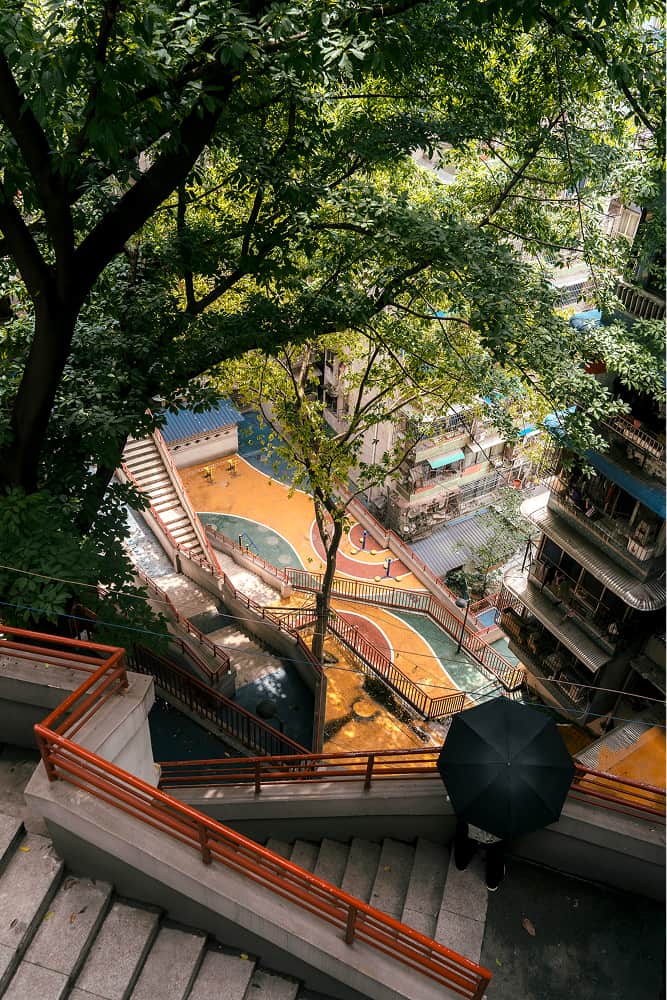
Crazy daily life of locals in the 3-dimensional city
Starting from CNY430/person
Chongqing 1949 Theater: Complete Visitor Guide and Ticket Booking

Chongqing 1949 Theater: Complete Visitor Guide and Ticket Booking

Sold 45
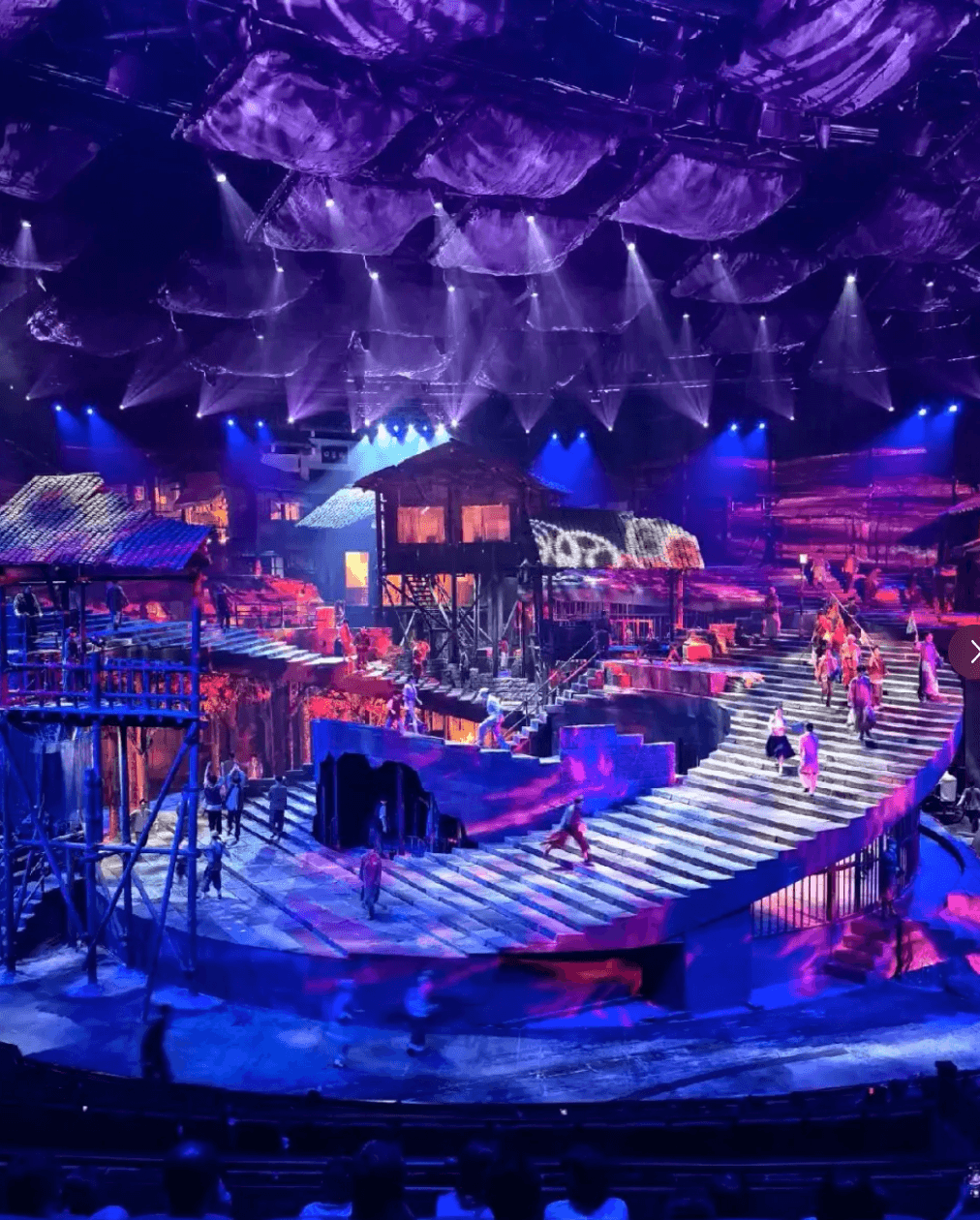
Click this page to book Chongqing 1949 Theater tickets directly. Get show time, duration, seating details, and clear advice for foreign visitors planning this immersive wartime theater experience in Chongqing.
Starting from CNY216/person

FAQs about Chongqing Auditorium

Q1: Where is the Chongqing Auditorium located?

A1: It is located at No. 173 Renmin Road, Yuzhong District, Chongqing, easily accessible by Metro Line 10.

Q2: What are the opening hours of Chongqing Auditorium?

A2: The site is open daily from 08:00 to 18:00, with the last ticket sale at 17:30.

Q3: How much is the ticket, and how do foreigners buy it?

A3: Tickets cost 8 RMB per person. Foreign visitors must bring their passport to purchase tickets at the onsite counter.

Q4: What attractions can I visit nearby?

A4: The Three Gorges Museum is right across the square, while Jiefangbei and Hongya Cave are within a short car ride.