2.The Cold War Origins and Epic Construction
A Cold War Beginning
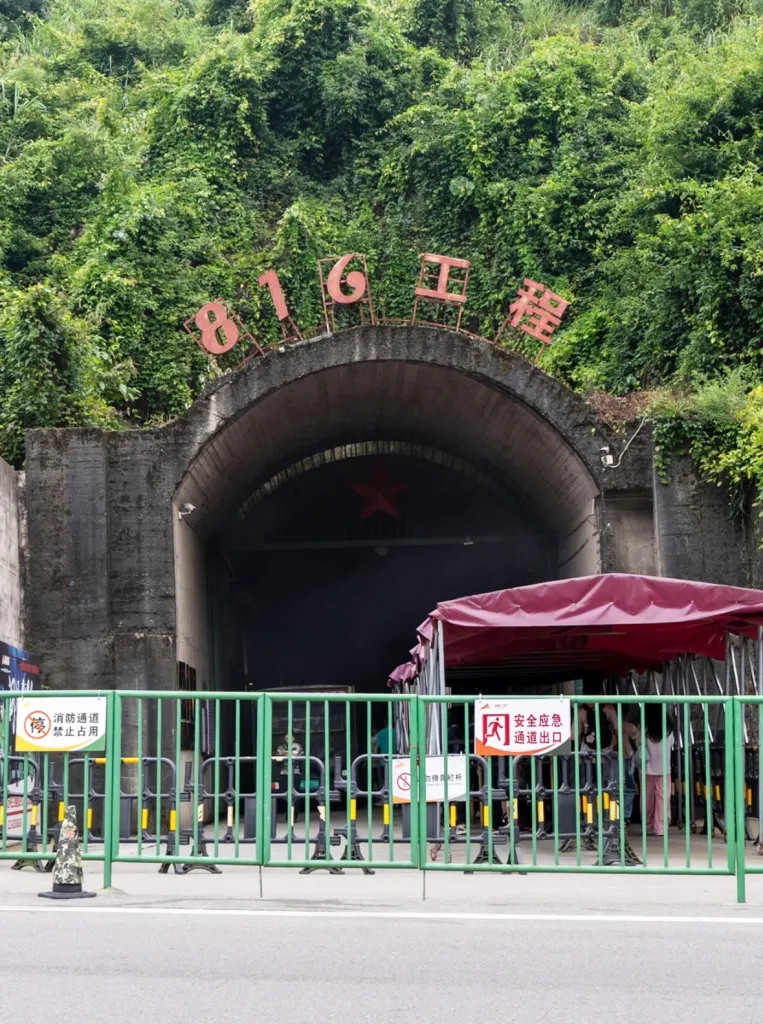
The story of the Chongqing 816 Nuclear Plant began in the 1960s, when the world was gripped by Cold War tensions. After the Sino-Soviet split, China decided to develop its own nuclear weapons program without Soviet assistance. To protect its reactor from airstrikes, Chinese engineers chose an audacious plan: build the entire facility inside a mountain.
The Workforce Behind the Project
From 1966 onward, more than 60,000 workers—many of them soldiers and young volunteers—were dispatched to Fuling. For 18 years, they carved tunnels and chambers with simple tools, dynamite, and sheer physical strength. Conditions were brutal: high heat, poor ventilation, and endless dust.
At peak construction, the caverns echoed with the roar of drills and explosions, and workers often stripped down to a single piece of clothing to endure the heat. Tragically, nearly 100 young men lost their lives, with the average age of those who died being under 21. Today, inscriptions and slogans on the walls silently honor their sacrifice.
A Giant Hidden Underground
The decision to build in Baitao Town was strategic. The Wuling Mountains provided natural cover, while the Wujiang River ensured a steady water supply for cooling systems. At the time, secrecy was absolute: even nearby villagers had little idea of what was happening beneath their feet.
3.Exploring the Underground Labyrinth
The Scale of the Facility
Walking into the Chongqing 816 Nuclear Plant feels like stepping into another world. The site covers 104,000 square meters, with:
18 giant chambers
130 tunnels including vertical shafts and side passages
A combined tunnel length of over 20 kilometers
The centerpiece is the reactor hall, a cavern 79.6 meters high (as tall as a 20-story building) and 25 meters wide.
Key Areas to See
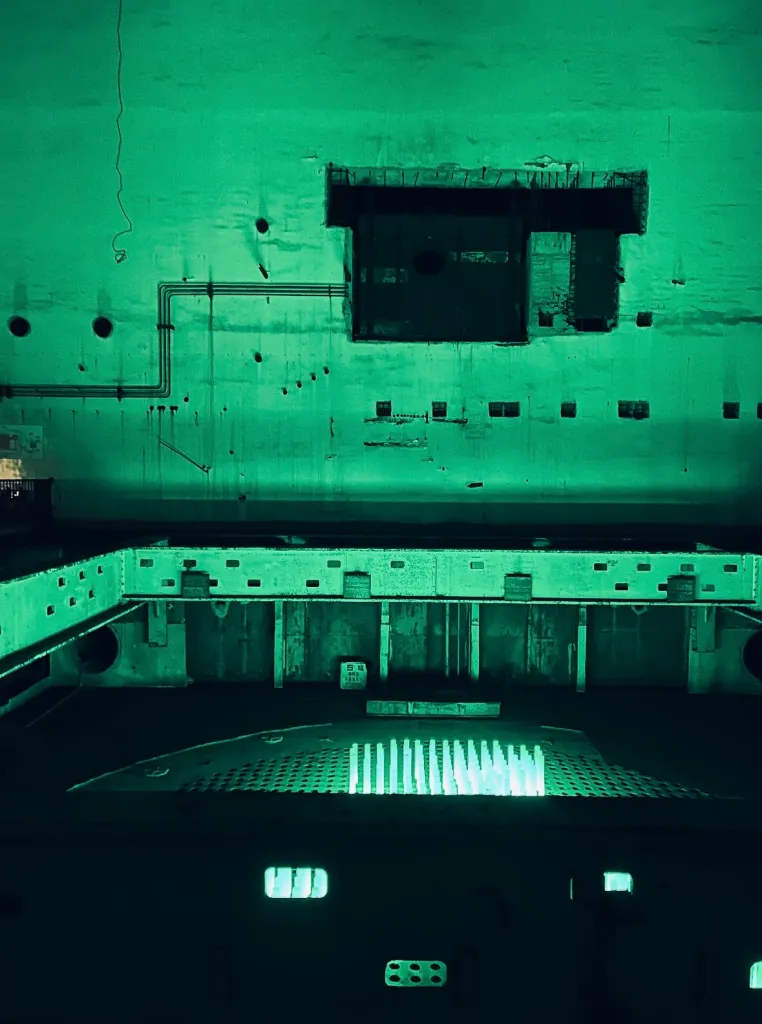
Reactor Hall: The most impressive chamber, featuring a massive underground void with eerie lighting. The reactor “base” still displays 2001 small holes, once designed for nuclear energy exchange.
Control Room: Once housed China’s most advanced computers of the era. Although much of the equipment is gone, the scale hints at the precision once required here.
Water Diversion Tunnel: A remarkable feat of engineering that drew water from the Wujiang River to cool the planned reactor.
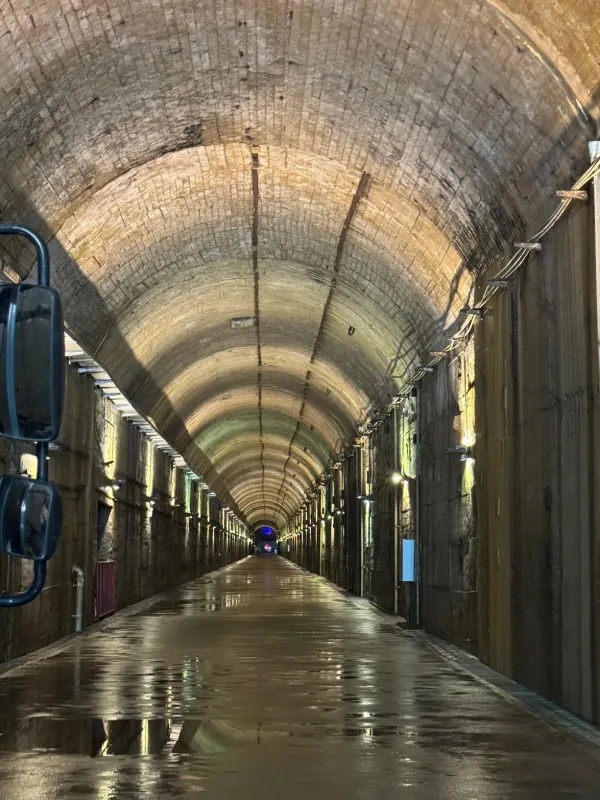
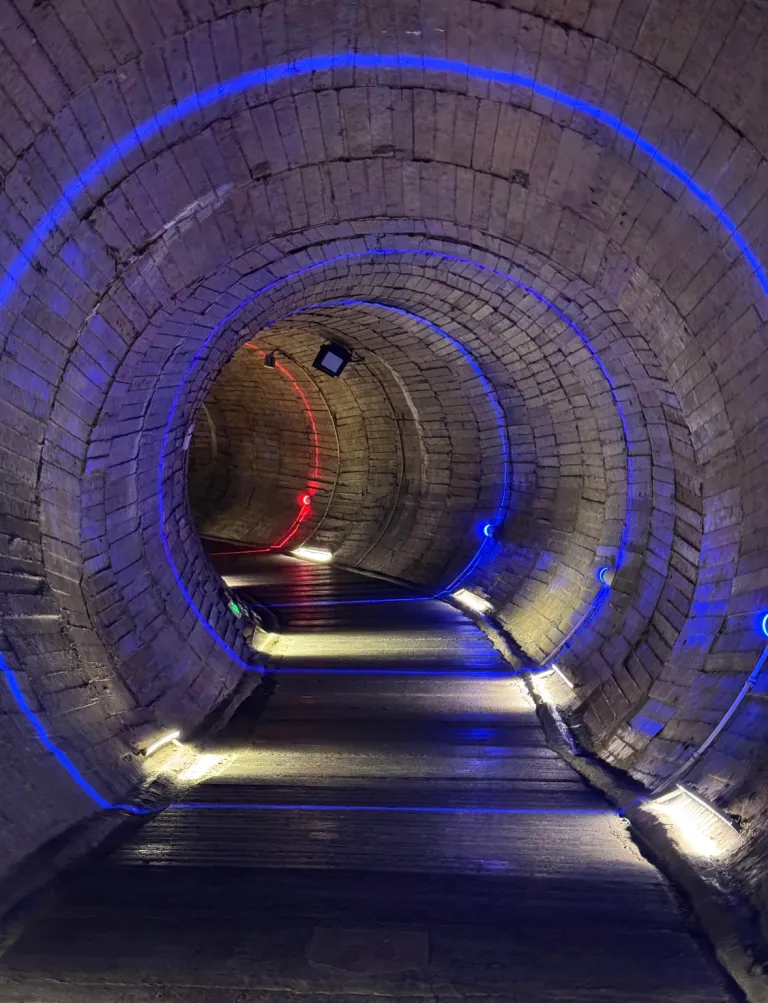
Neon-lit Passageways: Modern lighting creates a surreal, almost party-like atmosphere in some tunnels, contrasting with the solemn history.
The Visitor Experience
As you walk through, you’ll notice how the silence of the caverns mixes with the ghostly glow of green and blue lights. In places, motivational slogans remain on the walls, reminding visitors of the human effort that went into construction. For many tourists, the plant feels part Cold War museum, part science fiction film set.
4.From Secret Military Base to Tourist Attraction
Why It Was Abandoned
By 1984, after nearly two decades of work, the plant was 85% complete. However, changing international relations and China’s shifting military strategy meant that the reactor was no longer needed. Work stopped abruptly, leaving behind a ghostly, unfinished monument to Cold War ambition.
Declassification and Opening
For years, the existence of the 816 Project remained a state secret. Only in 2002 was the site officially declassified. By 2010, it began welcoming visitors, and in 2016, it was redeveloped as a national defense education and tourism site.
Why Visit Today
It is the largest man-made underground cavern in the world, an unmatched feat of human labor and ambition.
It provides a direct window into China’s Cold War history, a perspective rarely accessible to foreigners.
Its mix of engineering marvels, memorials, and surreal underground landscapes make it one of the most unusual attractions in Chongqing.
Suggested Itineraries
If you plan a trip, combine the visit with nearby attractions:
Baiheliang Underwater Museum: The world’s only underwater stone carving museum, recording 1,200 years of Yangtze River hydrology.
Wuling Mountain Grand Canyon: A natural wonder featuring cliffside walkways, karst formations, and spectacular views.
FAQs about Chongqing 816 Nuclear Plant
Q1: Where is Chongqing 816 Nuclear Plant located?
A1: It is in Baitao Town, Fuling District, about 120 km from Chongqing city center.
Q2: What are the opening hours?
A2: From April to October: 09:00–17:00; from November to March: 09:00–16:30.
Q3: How much is the ticket?
A3: Adult tickets are 60 RMB in peak season and 40 RMB in low season (group discounts available). Students, seniors, and military personnel may enjoy half-price tickets. Foreign visitors must bring passports.
Q4: Is it worth visiting for foreign tourists?
A4: Absolutely. It is the largest underground man-made cavern in the world, rich in Cold War history, and unlike any other tourist site in China.