Highlights and Must-See Spots
Wuhou Temple is filled with cultural relics, stone inscriptions, and peaceful courtyards. Below are the must-visit attractions and the stories behind them.
1.The Tang Stele (唐碑)
This ancient stele, written by Tang Dynasty prime minister Wu Yuanheng, praises Zhuge Liang’s political wisdom and moral virtue. The inscription reflects how, even centuries later, the strategist’s reputation for loyalty and intelligence endured. It’s a key piece of Chinese calligraphic and historical art.
2.The Ming Stele (明碑)
Unlike most imperial shrines destroyed after dynastic changes, Wuhou Temple survived thanks to the respect later rulers had for Zhuge Liang’s legacy. The Ming Stele records this rare act of preservation, highlighting how virtue transcended politics.
3.The Corridors of Generals and Ministers (文臣武将廊)
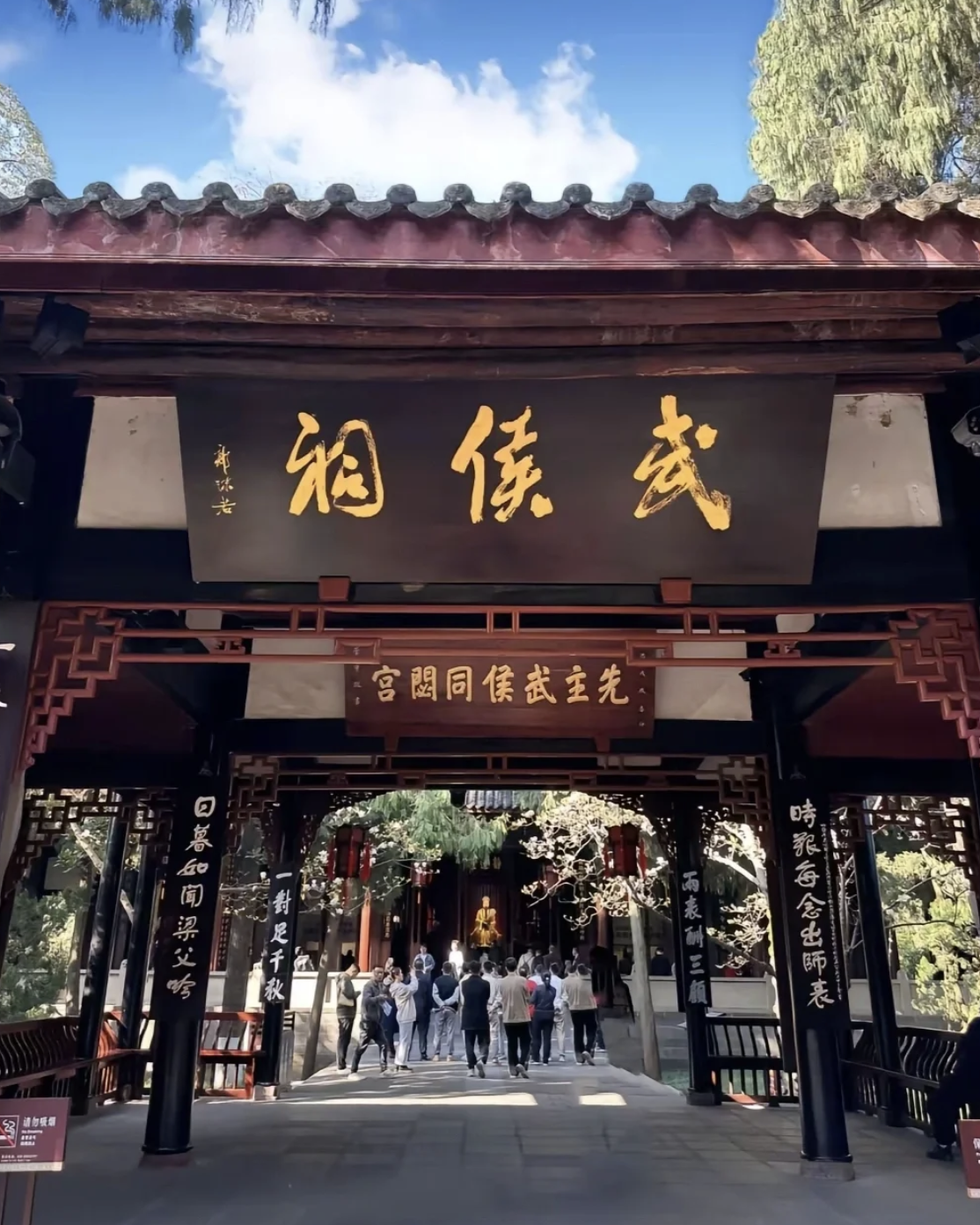
Two long corridors line the path — one for civil ministers, one for military generals — each housing detailed clay statues of 28 figures from the Shu Han Kingdom. Visitors often recognize the full text of “The Memorial on Sending Out the Troops (出师表)”, which Zhuge Liang wrote to his emperor before battle.
It’s a deeply moving place — many Chinese visitors whisper the words they once memorized in school.
4.The Hall of Emperor Liu Bei (刘备殿)
The main hall honors Liu Bei, seated in the center with his loyal brothers Guan Yu (right) and Zhang Fei (left). Interestingly, the figure beside Liu Bei is not his son Liu Shan, but his grandson Liu Chen, who died heroically rather than surrendering — a symbolic decision reflecting the people’s admiration for courage and loyalty.
5.The Hall of Zhuge Liang (诸葛亮殿)
This section is the soul of Wuhou Temple. The hall is a complex of six traditional structures — a front chamber, bell and drum towers, side rooms, and a grand main hall.
At the entrance stands the famous couplet known as “The Heart and Mind of Strategy (攻心联)”, praising Zhuge Liang’s unmatched wisdom in both governance and warfare. The calm air, incense smoke, and echoing chants create a solemn yet inspiring atmosphere.
6.The Temple of the Three Brothers (三义庙)
Moved here in 1998, this shrine depicts the brotherhood oath between Liu Bei, Guan Yu, and Zhang Fei in the Peach Garden, symbolizing loyalty and righteousness — central virtues of the Three Kingdoms legend.
7.The Red Wall Passage (红墙夹道)
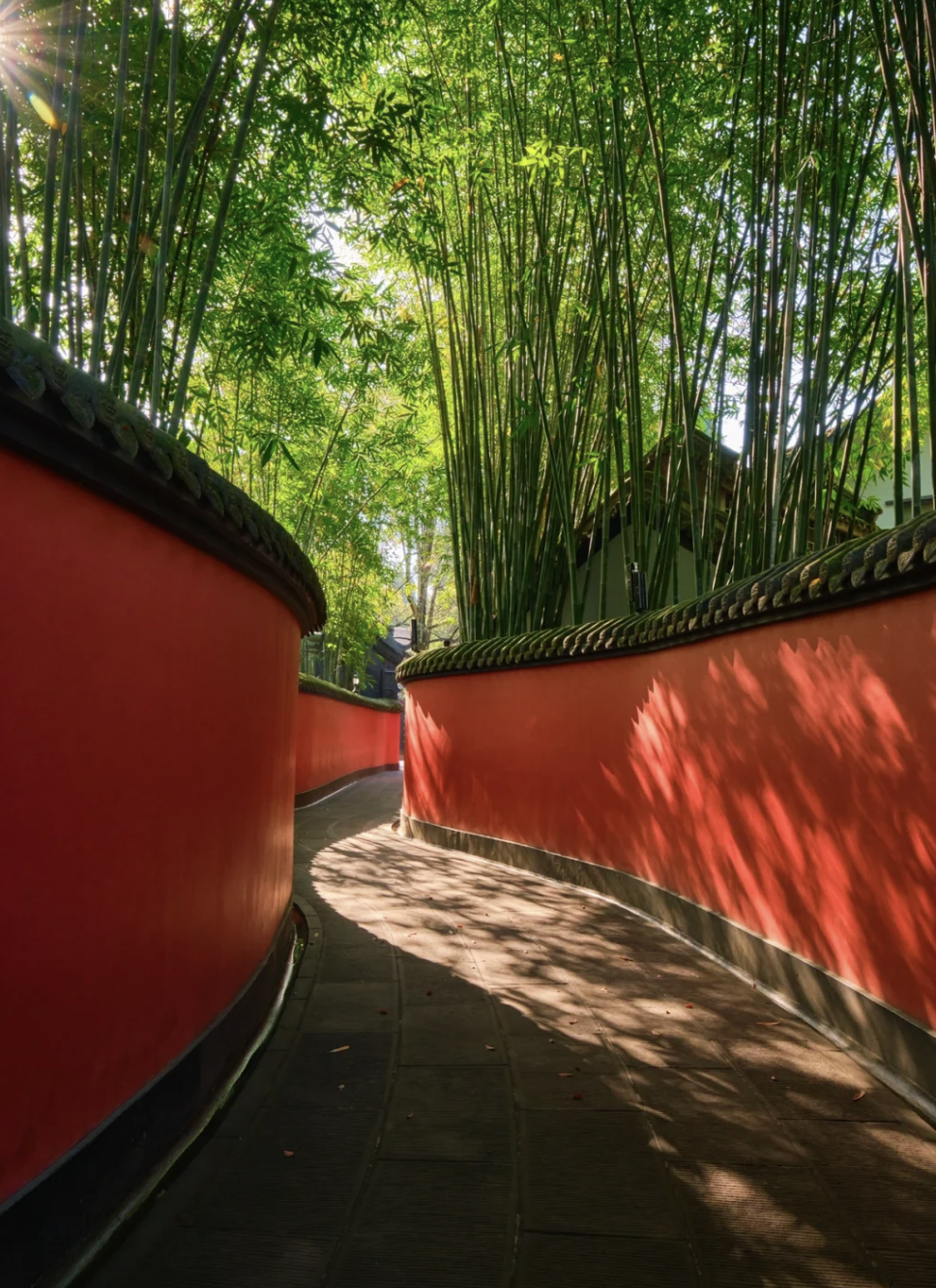
Perhaps the most photogenic spot in Chengdu, this narrow walkway of red walls and green bamboo curves gracefully around Huiling (惠陵), Liu Bei’s tomb. The sunlight filtering through bamboo leaves paints a dreamy contrast of light and shadow on the vermilion walls — a scene that has become iconic on social media.
📸 Photo Tip: Visit early morning or near closing time for the best light and fewer crowds.
8.Huiling (惠陵)
This tomb contains the remains of Liu Bei and his wives, Lady Gan and Lady Wu — a rare example of a royal family’s joint burial. The site is peaceful and well-kept, a fitting tribute to the emperor who dreamed of restoring the Han Dynasty.
9.Nanjiao Park and the Arched Gate (南郊公园)
At the temple’s south exit, you’ll find Nanjiao Park, a great place to relax after your visit. Its iconic arched gate — with four perfectly aligned arches — is a favorite photography spot thanks to its sense of symmetry and depth.
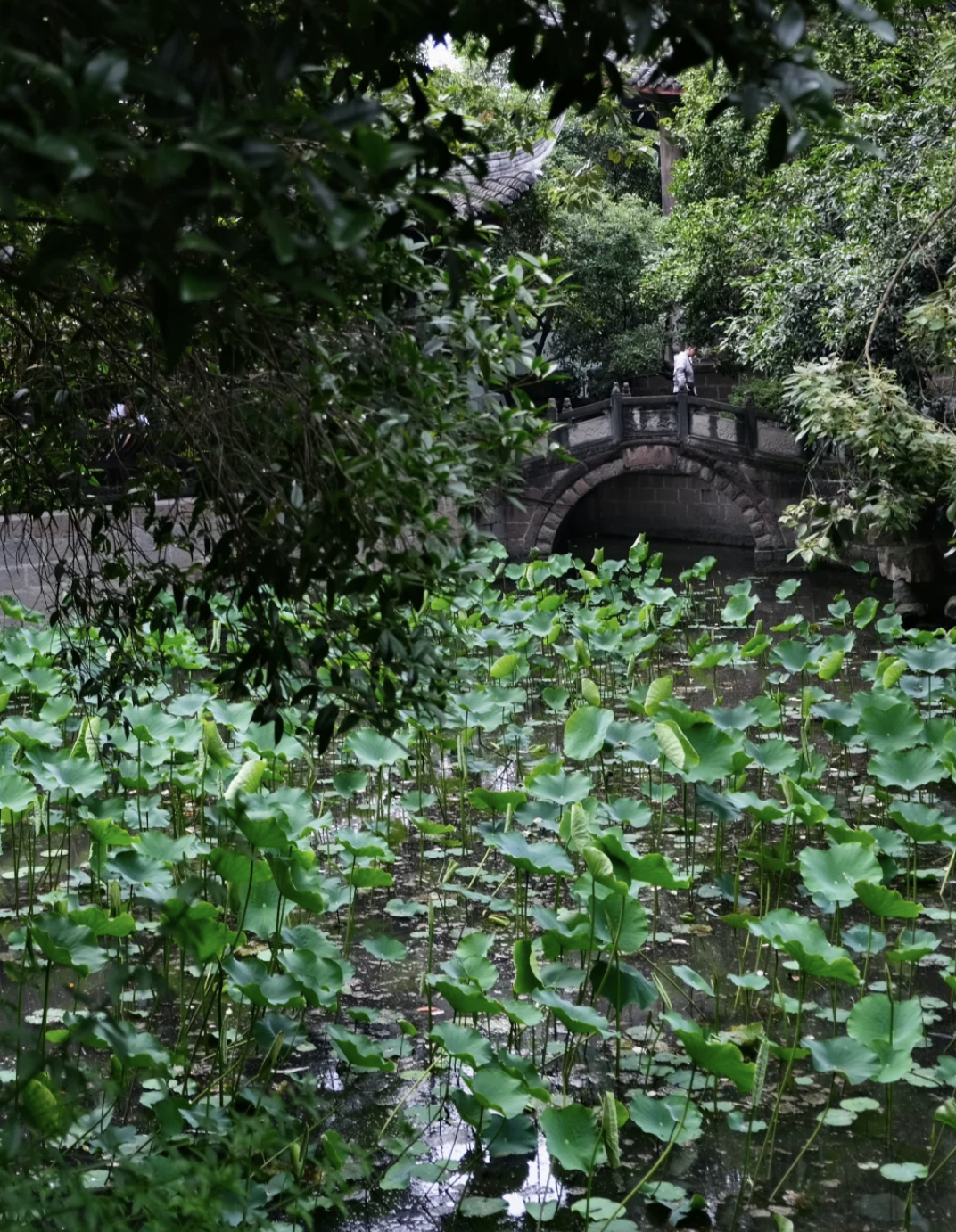
The Visitor Experience — History, Culture & Photography
1.Follow the Classic Route
If you’re here to understand the Three Kingdoms history, follow the main route:
Main Gate → Tang Stele → Ming Stele → Generals & Ministers Corridors → Liu Bei Hall → Zhuge Liang Hall → Three Brothers Temple → Red Wall → Huiling → Exit via Nanjiao Park → Jinli Street.
This route gives you a chronological journey through Shu Han’s rise, loyalty, and legacy.
2.Capture the Perfect Red Wall Photo
The Red Wall Passage is Chengdu’s most famous Instagram and Xiaohongshu spot. The curved red walls, bamboo shadows, and ancient tiles make a perfect photo composition.
💡 Tips for the Best Shot:
Arrive at opening time (9 AM) or before closing (after 5 PM).
Bring a wide-angle lens or smartphone for the full depth effect.
Wear light-colored or traditional-style clothing to contrast with the red background.
3.Join a Guided Tour
For those unfamiliar with Three Kingdoms history, hiring a guide (¥20–¥50) adds immense value. Without explanation, much of the symbolism in the statues, steles, and architecture can be missed.
Alternatively, rent an audio guide or use a bilingual app to follow along.
4.Temple Etiquette
Even though Wuhou Temple is a tourist site, it remains a sacred space. Visitors should:
Nearby Attractions, Food & Practical Tips
1.Visit Jinli Ancient Street
Right beside Wuhou Temple lies Jinli Street, one of Chengdu’s oldest pedestrian lanes. It’s full of tea houses, lanterns, street food stalls, and souvenir shops — perfect for extending your visit into the evening.
After exploring the temple’s calm atmosphere, Jinli’s festive vibes offer a lively contrast.
2.Try Local Snacks Nearby
After your visit, reward yourself with Chengdu’s famous street foods:
Spicy Tofu (麻辣豆腐)
Dan Dan Noodles (担担面)
Tangyou Guozi (糖油果子) — sweet glutinous rice balls
Chengdu Skewers (串串香)
Many vendors in Jinli and Wuhou Shrine Street serve authentic local dishes — a great way to end your trip.
3.Combined Itinerary Recommendation
For a half-day cultural route:
Morning: Wuhou Temple
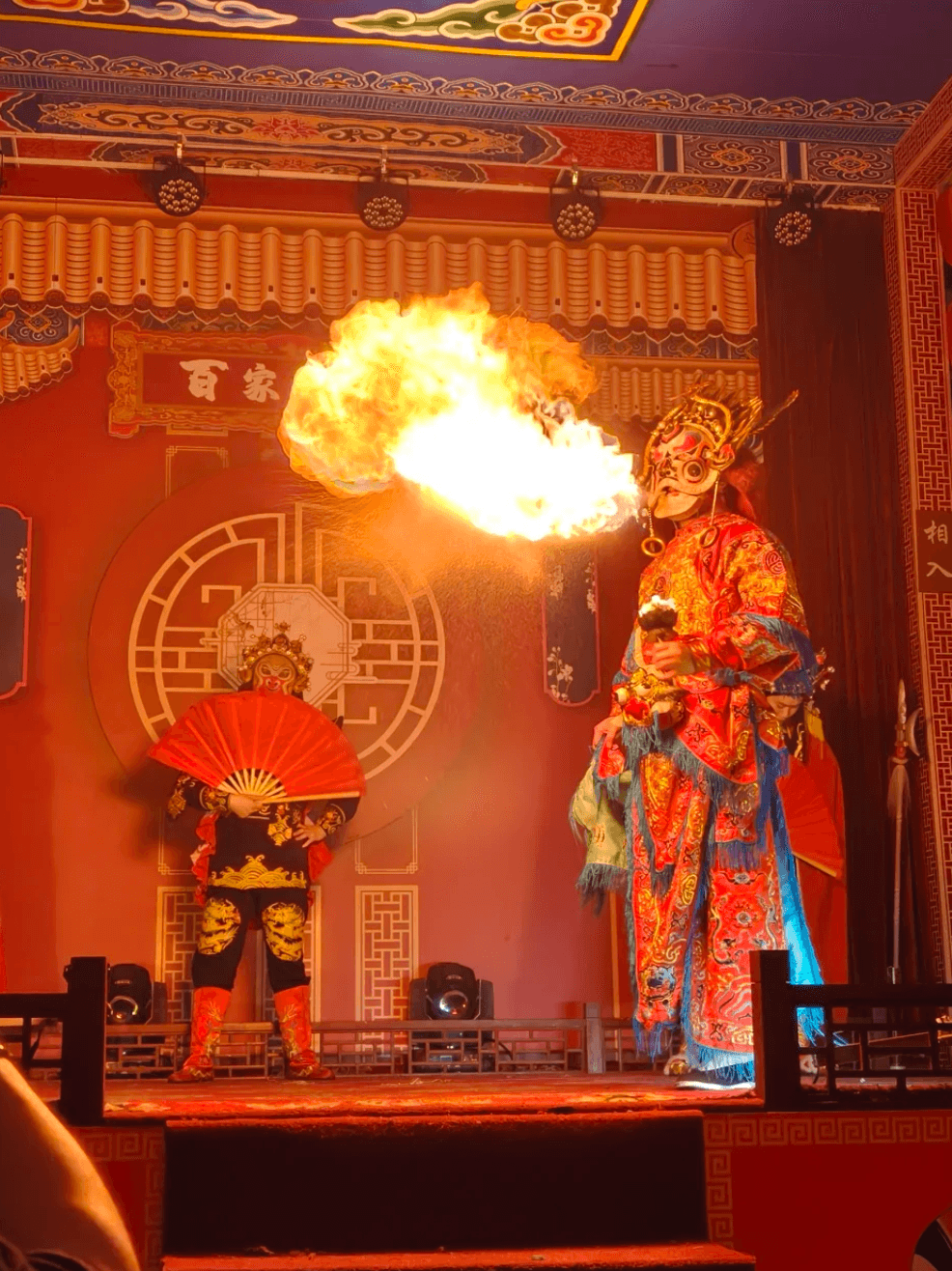
Afternoon: Jinli Street + Sichuan Opera Show
Evening: Hotpot dinner at nearby restaurants like Shu Jiuxiang or Xiao Longkan
This itinerary combines history, culture, and food, giving visitors a full taste of Chengdu’s essence.
4.Travel Tips
Photography: Red Wall and bamboo paths are best during morning/late afternoon.
Tickets: Book through the official mini-program to avoid queues.
Time Management: Set aside 2–3 hours for the temple itself.
Best Season: Spring and autumn offer mild temperatures and soft natural lighting.
Language Tip: Most signs have English translations, but a guide adds much more context.
FAQs About Wuhou Temple
1.What is Wuhou Temple famous for?
It’s the most important shrine honoring Zhuge Liang, the brilliant strategist of the Three Kingdoms, and Liu Bei, the Shu Han emperor.
2.How long should I spend at Wuhou Temple?
Plan for 2–3 hours to explore halls, take photos, and learn about the history.
3.Can I take photos inside the halls?
Yes, but without flash. Be respectful and avoid blocking pathways.
4.What’s the best time to visit for photography?
Early morning or late afternoon — soft lighting enhances the red walls and bamboo shadows.
5.Is Wuhou Temple suitable for children?
Yes, but consider hiring a guide to make the history engaging for younger visitors.
6.Can I visit Jinli Street from Wuhou Temple?
Absolutely — the two are directly connected. Most visitors explore both together.