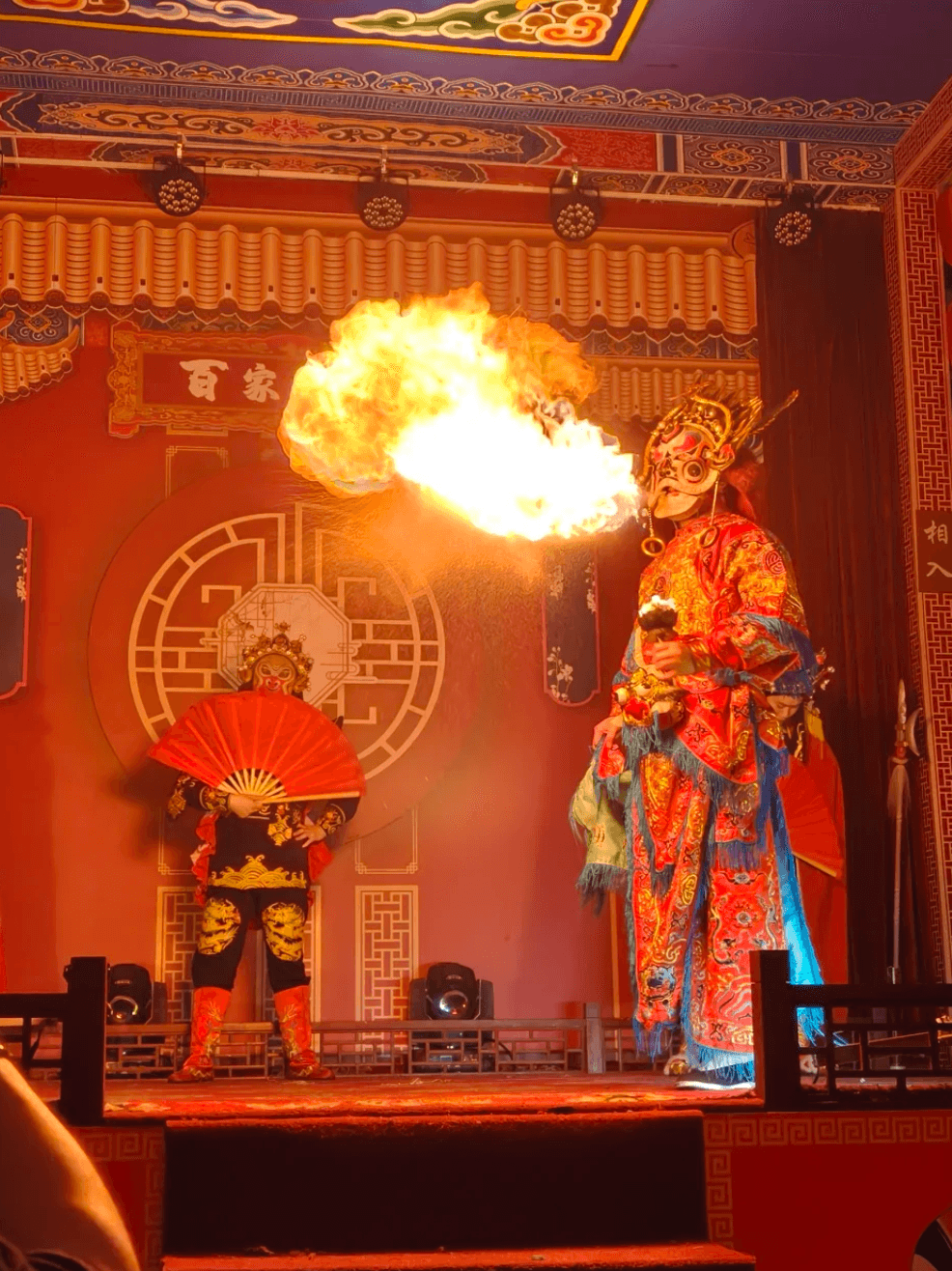
Uncovering History — The Jinsha Discovery and Key Exhibits
The Jinsha Site was discovered in 2001 during urban construction, revealing thousands of gold, jade, bronze, and ivory artifacts buried beneath the modern city. It quickly became one of the most significant archaeological finds of the 21st century, proving the existence of a major civilization that thrived in Sichuan around 1200–650 BCE.
1.The Relics Hall (遗迹馆)
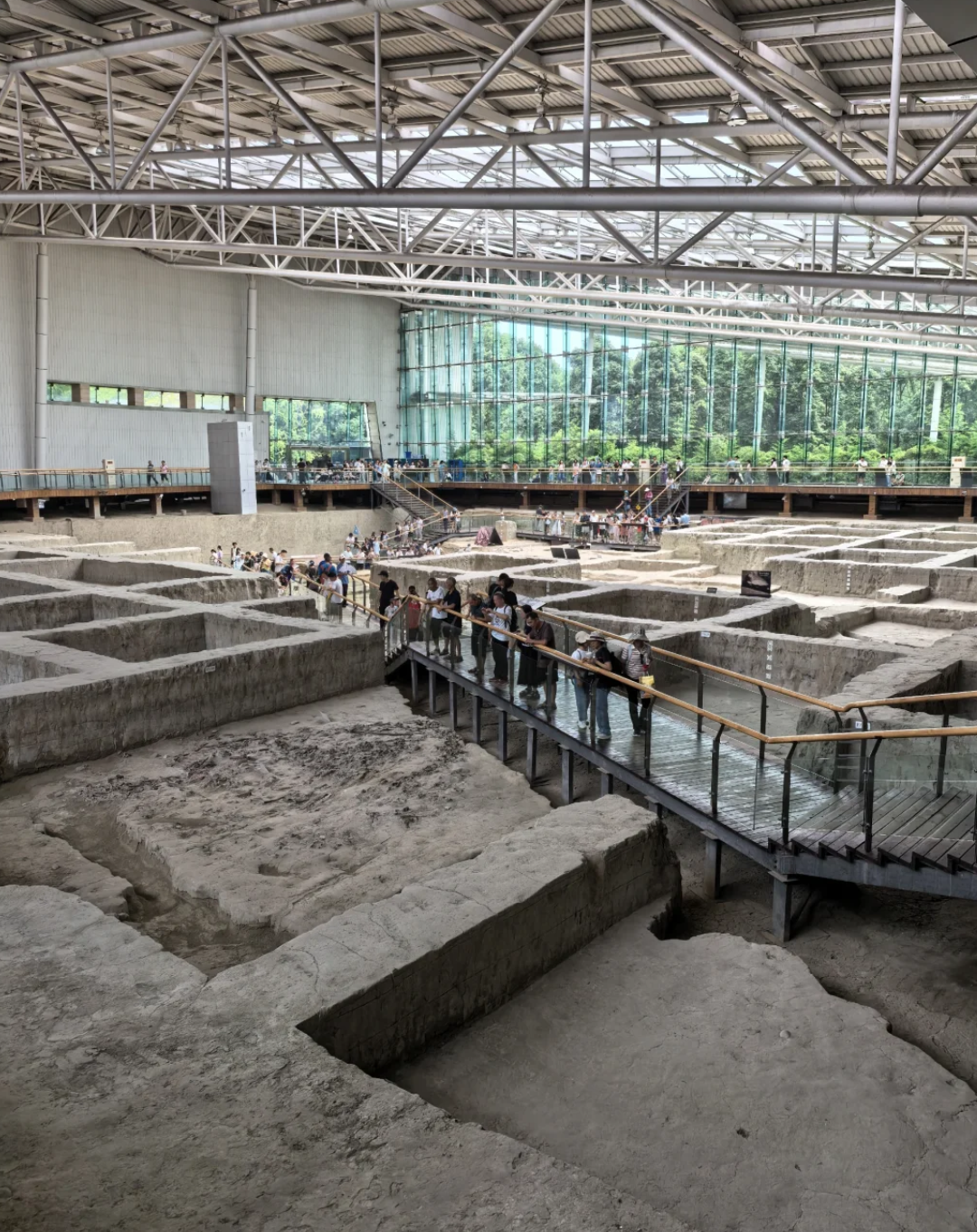
Your journey begins at the Relics Hall, which preserves the original excavation site. Wooden walkways lead you through glass-covered pits showing the ancient sacrificial areas, complete with ivory tusks, jade relics, and soil layers that still carry the traces of 3,000 years of history.
Look for volunteers in red vests — they offer free guided tours explaining the meaning behind each site. Standing before these relics, you can almost feel the spiritual power of the Ancient Shu people and their connection to nature and the cosmos.
2.The Exhibition Hall (陈列馆)
This is the highlight of Jinsha, featuring five main exhibition sections across multiple floors.
Hall 1: The Ancient Homeland (远古家园)
A recreated scene of the Shu people’s daily life — farming, fishing, and crafting. It’s a vivid introduction to the world before modern Chengdu existed.
Hall 2: The Royal City (王都剪影)
Artifacts and murals depict Jinsha as a thriving capital of the Shu Kingdom. Here, you can see tools, ornaments, and even ancient musical instruments that reveal their advanced craftsmanship.
Hall 3: Heaven and Earth Eternal (天地不绝)
A dazzling display of bronze, jade, and gold artifacts. Don’t miss the Bronze Standing Figure, a mysterious sculpture that reflects the Shu people’s connection to the heavens.
Hall 4: Treasures Through the Ages (千载遗珍)
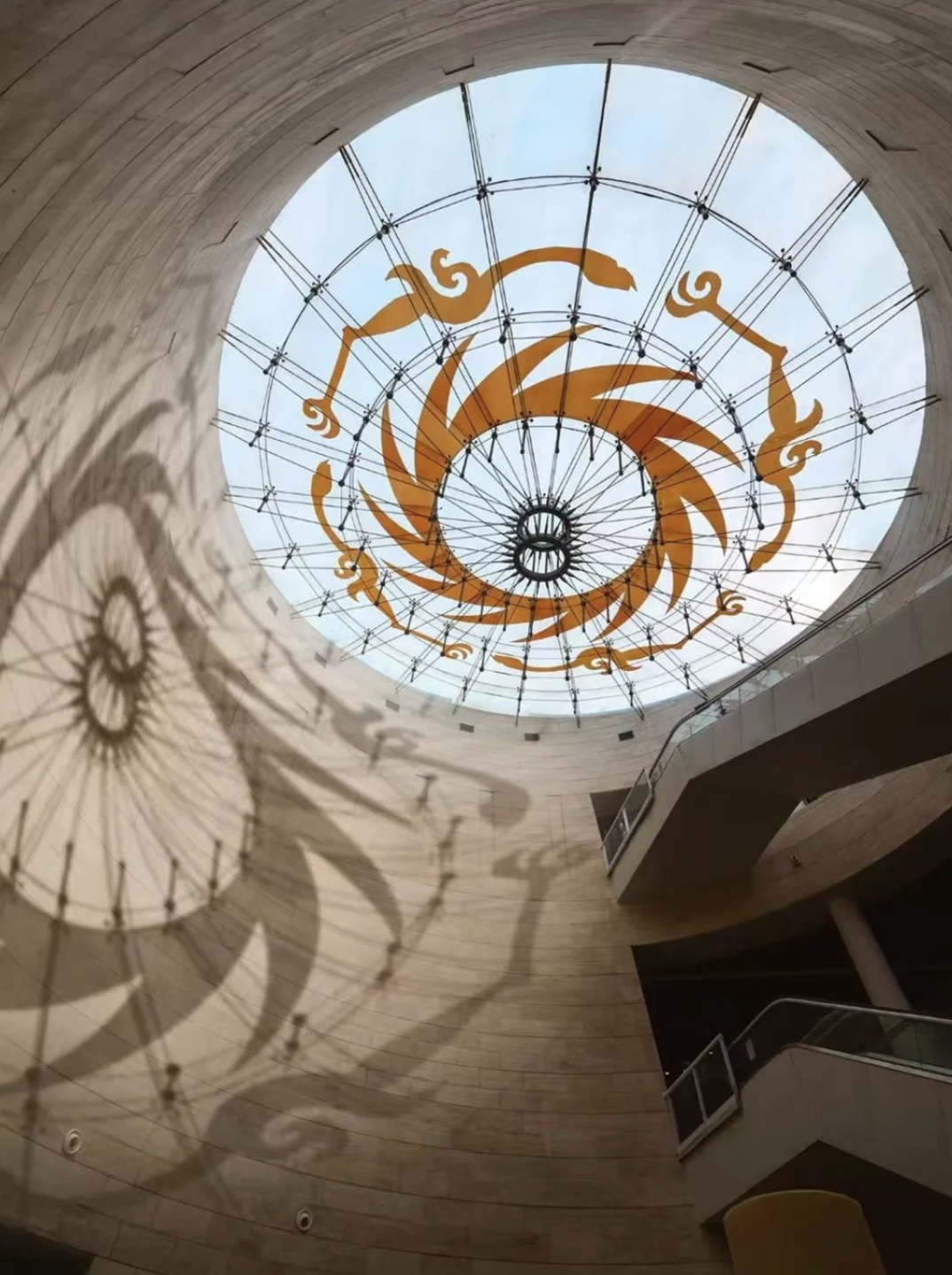
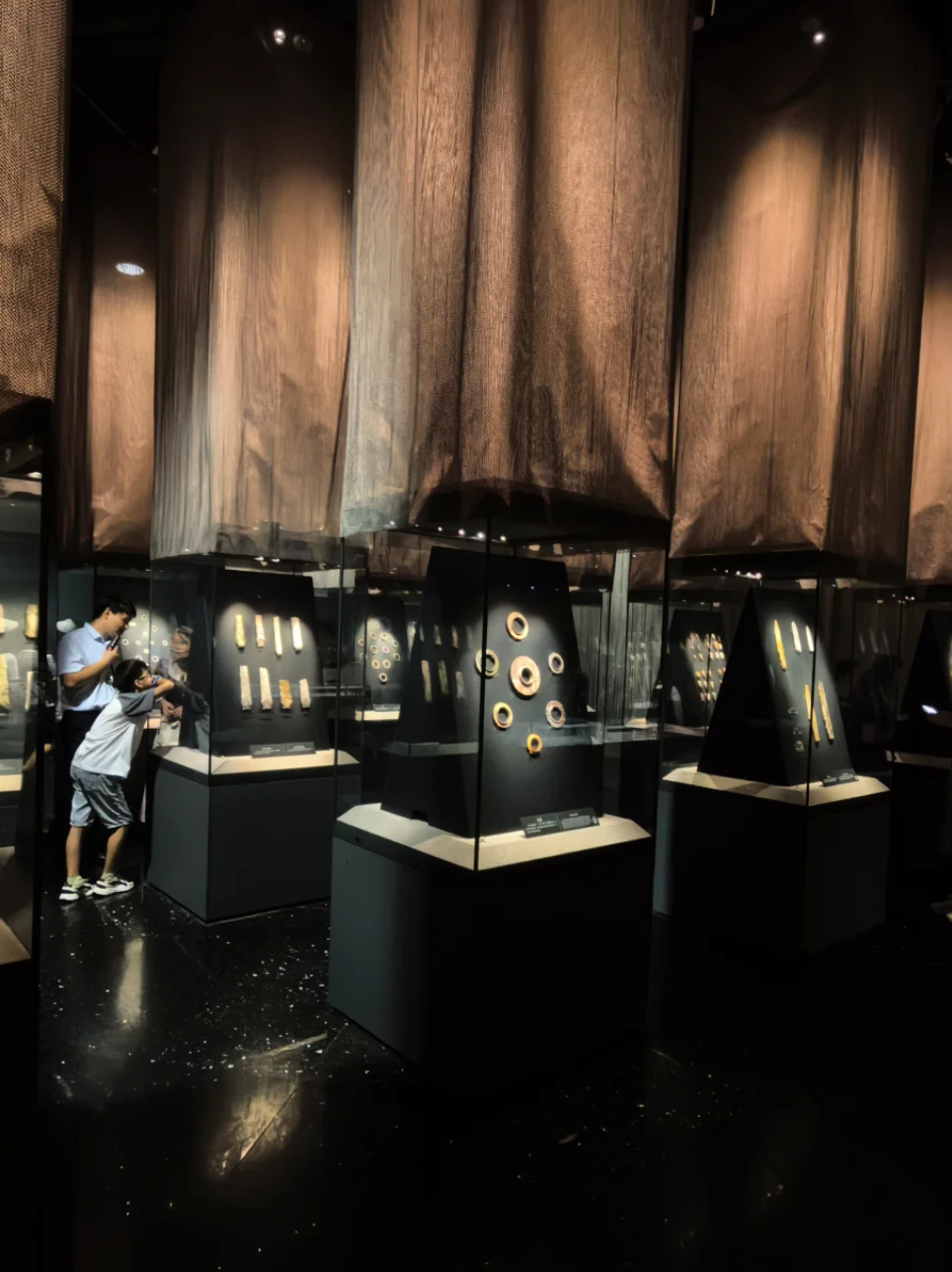
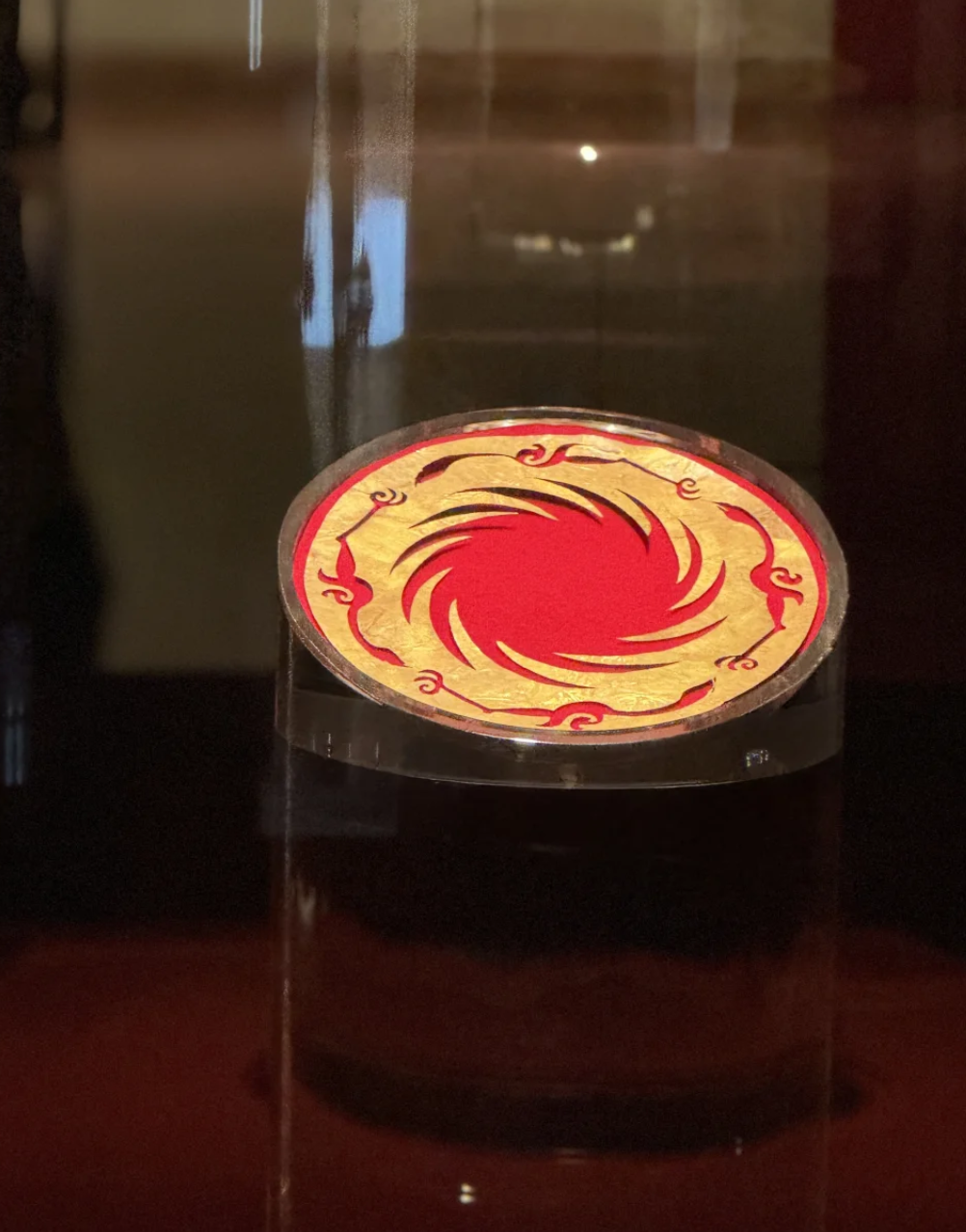
The museum’s crown jewels are here — the Sun and Immortal Bird Gold Ornament, a delicate 0.02cm-thick gold foil symbolizing light, life, and eternity, now the emblem of Chinese cultural heritage. Nearby, the Large Gold Mask and Ten-section Jade Cong rival the treasures found at Sanxingdui, showcasing the spiritual depth of Shu culture.
Hall 5: Interpreting Jinsha (解读金沙)
An interactive exhibit on the wider Ancient Shu civilization, complete with sand-table models, digital reconstructions, and maps linking Jinsha to Sanxingdui and other sites in Sichuan.
💡 Fun Fact: The Sun and Immortal Bird pattern was chosen as China’s official cultural heritage logo — representing harmony between humanity and nature.
Beyond the Museum — Nature, Photography, and Family Fun
The beauty of the Jinsha Site Museum goes beyond its relics. Its design blends ancient history with modern landscaping, creating a peaceful park-like environment.
1.Ebony Forest (乌木林)
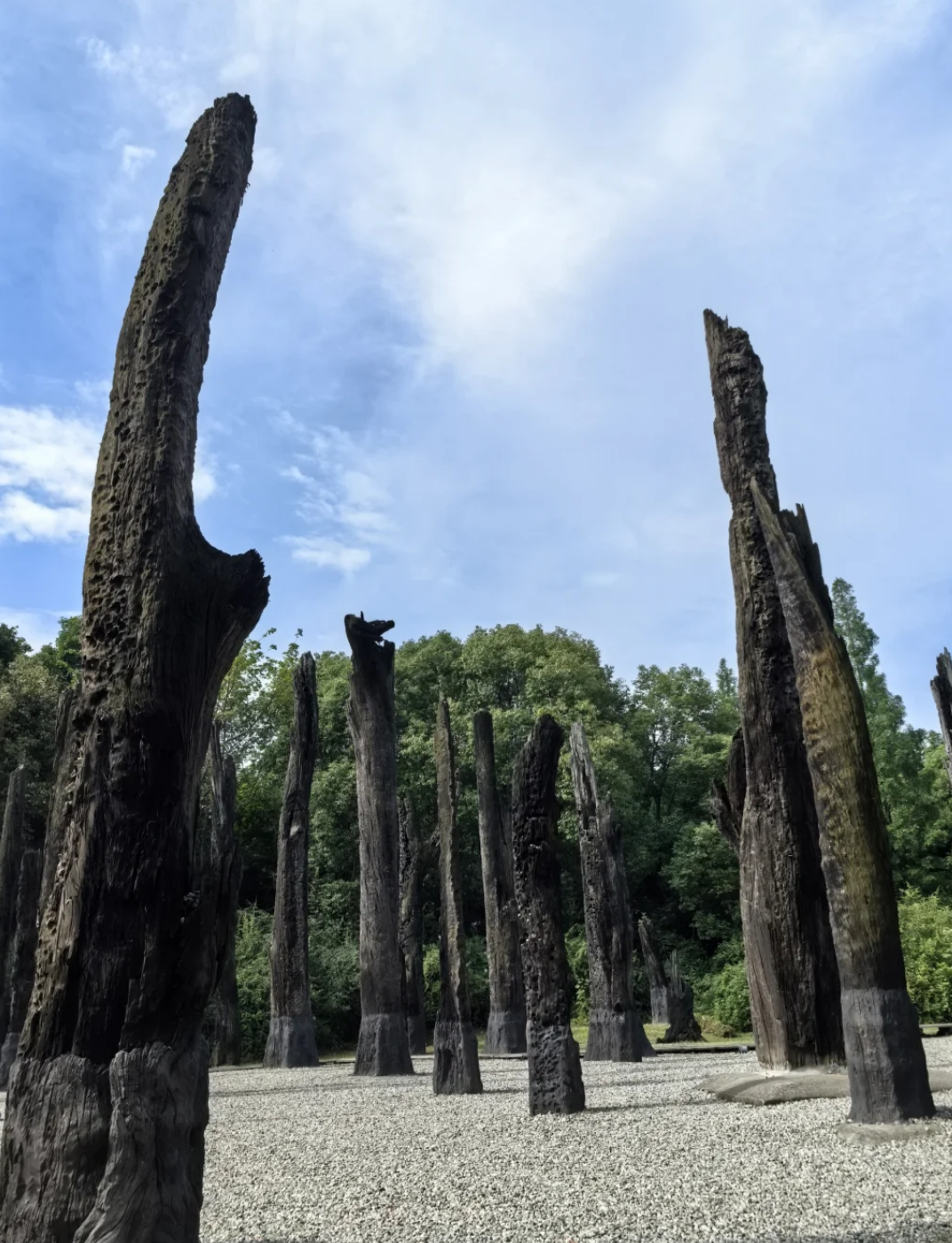
Right after entering through the South Gate, you’ll see the famous Ebony Forest, where dozens of ancient black tree trunks stand among green bamboo. These thousand-year-old fossilized woods were unearthed during construction and now form a stunning natural photo backdrop. It’s one of the museum’s top Instagram-worthy spots.
📸 Photo Tip: The contrast between dark wood and lush greenery makes for dramatic photos — go early morning for the best light.
2.Deer Garden (鹿苑)
Families love this area — a small natural park where visitors can see and feed gentle deer. It’s especially popular with children, though visitors should only use the food provided by the staff. The quiet environment also offers a pleasant break between museum visits.
3.Jade Road (玉石之路)
A scenic walking path made of large jade stones and pebbles, symbolizing the ancient Shu’s reverence for jade. It’s surrounded by trees and soft grass, creating a tranquil spot for strolling and relaxing. Don’t forget mosquito spray in summer!
4.Cultural and Creative Shops
The basement level (B1) houses souvenir stores and art shops selling museum-themed gifts, books, and jewelry inspired by the Sun and Immortal Bird. You can also find temporary exhibitions and workshops on ancient crafts — great for travelers interested in art and design.
Visiting Tips and Suggested Routes
1.Recommended Routes
There are two main ways to explore the museum depending on your interests:
Classic Route (2–3 hours):
South Gate → Ebony Forest → Relics Hall → Exhibition Hall → Deer Garden → South Gate
Family-Friendly Route:
East Gate → Relics Hall → Exhibition Hall (focus on Hall 4) → Deer Garden → Ebony Forest → South Gate
Both routes end near the museum café, where you can relax with a drink before heading back.
2.Best Visiting Times
Morning (9:00–11:00 AM): Fewer crowds, good lighting for photos.
Late Afternoon (3:00–5:00 PM): Softer sunlight, great for outdoor areas.
Avoid Mondays, and book 2–3 days ahead during holidays.
3.Nearby Attractions
Du Fu Thatched Cottage (杜甫草堂): 10 minutes by taxi — a poetic retreat celebrating China’s greatest poet.
Qingyang Palace (青羊宫): One of the oldest Taoist temples in Chengdu, only 15 minutes away.
Huanhuaxi Park (浣花溪公园): A quiet riverside park perfect for walking after your museum visit.
4.Traveler Tips
Weather: Bring an umbrella; Chengdu is often humid or rainy.
Comfort: Wear comfortable shoes — the park and museum are large.
Language: English signs are available, but consider hiring a guide for deeper insight.
Food: Light snacks and drinks are sold at the café and vending machines.
FAQs About Chengdu Jinsha Site Museum
1.How long does it take to visit the Jinsha Site Museum?
Around 2–4 hours, depending on how much time you spend in the exhibition halls and gardens.
2.What is the Jinsha Site famous for?
It’s best known for the discovery of the Sun and Immortal Bird gold ornament, symbolizing ancient Shu civilization and Chinese cultural heritage.
3.Is it suitable for kids?
Yes! The museum includes interactive exhibits, the Deer Garden, and open outdoor spaces perfect for families.
4.Can I take photos inside?
Yes, except in certain areas with fragile artifacts. Flash photography is prohibited.
5.Is it related to Sanxingdui?
Yes — both belong to the Ancient Shu civilization, but Jinsha represents a later and more urban phase of that culture.