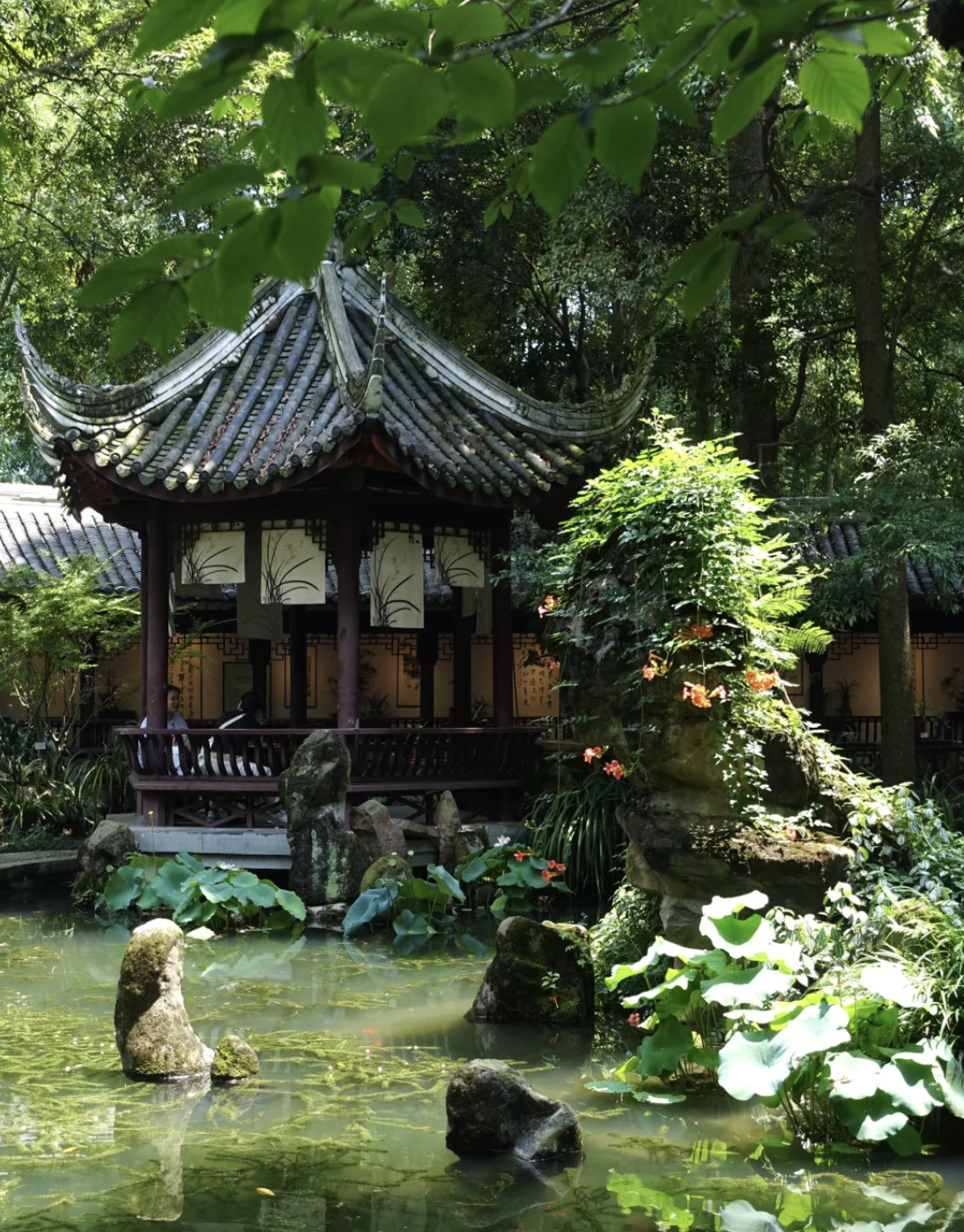
Main Attractions and Must-See Highlights
1.The Main Entrance and Central Axis Walk
Start your visit at the main gate, and follow the central axis route:
Main Gate → Great Hall → Poetry History Hall → Rustic Gate → Gongbu Shrine → Thatched Cottage Site.
This route mirrors Du Fu’s life in Chengdu — from his official career to his humble home. Along the way, interpretive signs provide English and Chinese translations of his poems, helping visitors connect with the emotions behind his verses.
The Poetry History Hall (诗史堂) is particularly striking, featuring calligraphic renditions of Du Fu’s most famous lines. Take a moment to read or even recite one; it’s a moving way to experience the soul of Tang poetry.
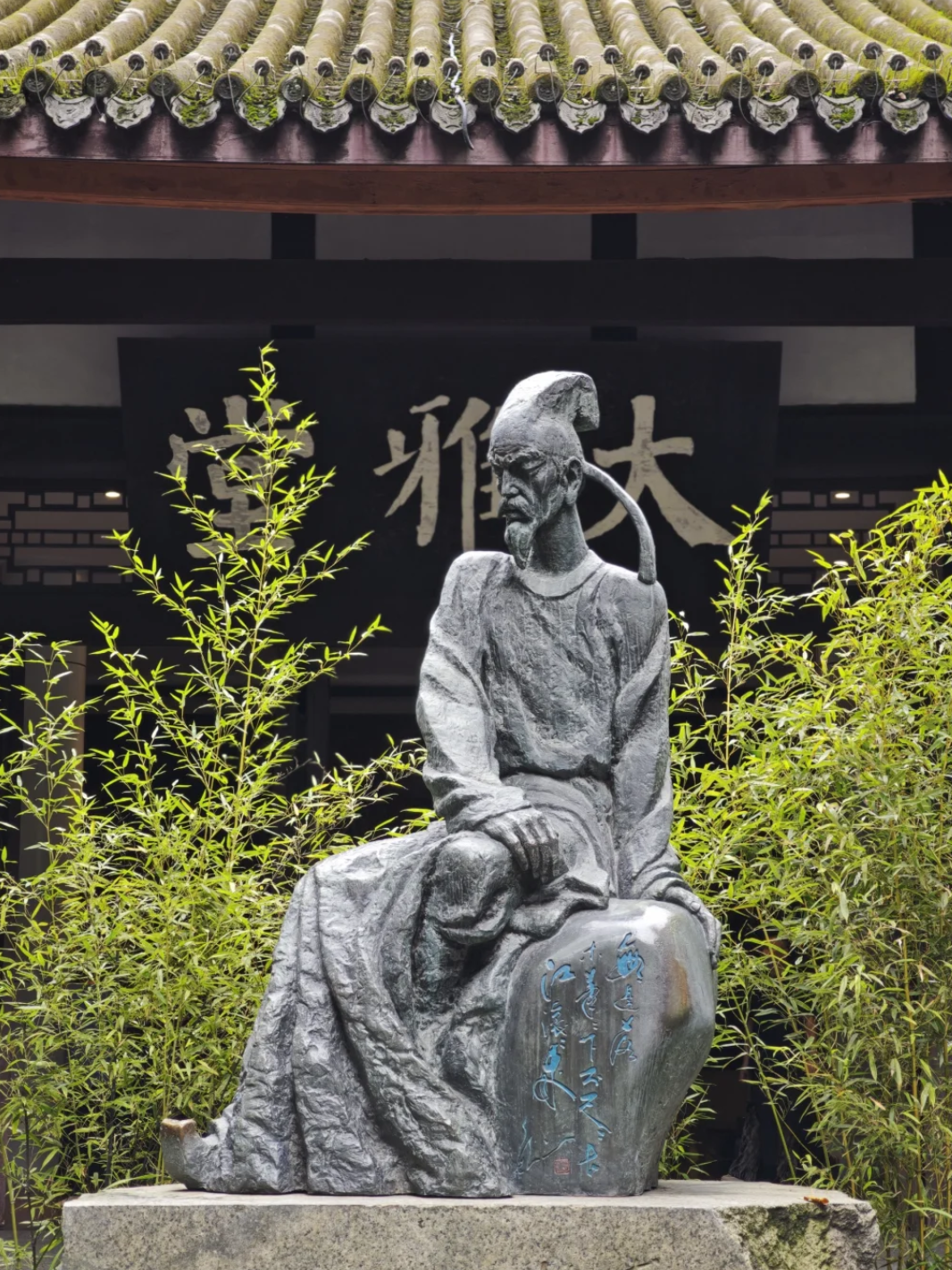
2.The Original Thatched Cottage Site (茅屋旧址)
This is the spiritual heart of the entire park. The thatched hut, rebuilt according to historical records, sits beside bamboo groves and a quiet pond. Here, Du Fu lived in simplicity and wrote about the struggles of his time.
Standing before the cottage, you can almost imagine him sitting by candlelight, brush in hand, writing lines like:
📸 Photo Tip: The soft morning light and gentle shadows of bamboo make this one of the most photogenic spots in Chengdu.
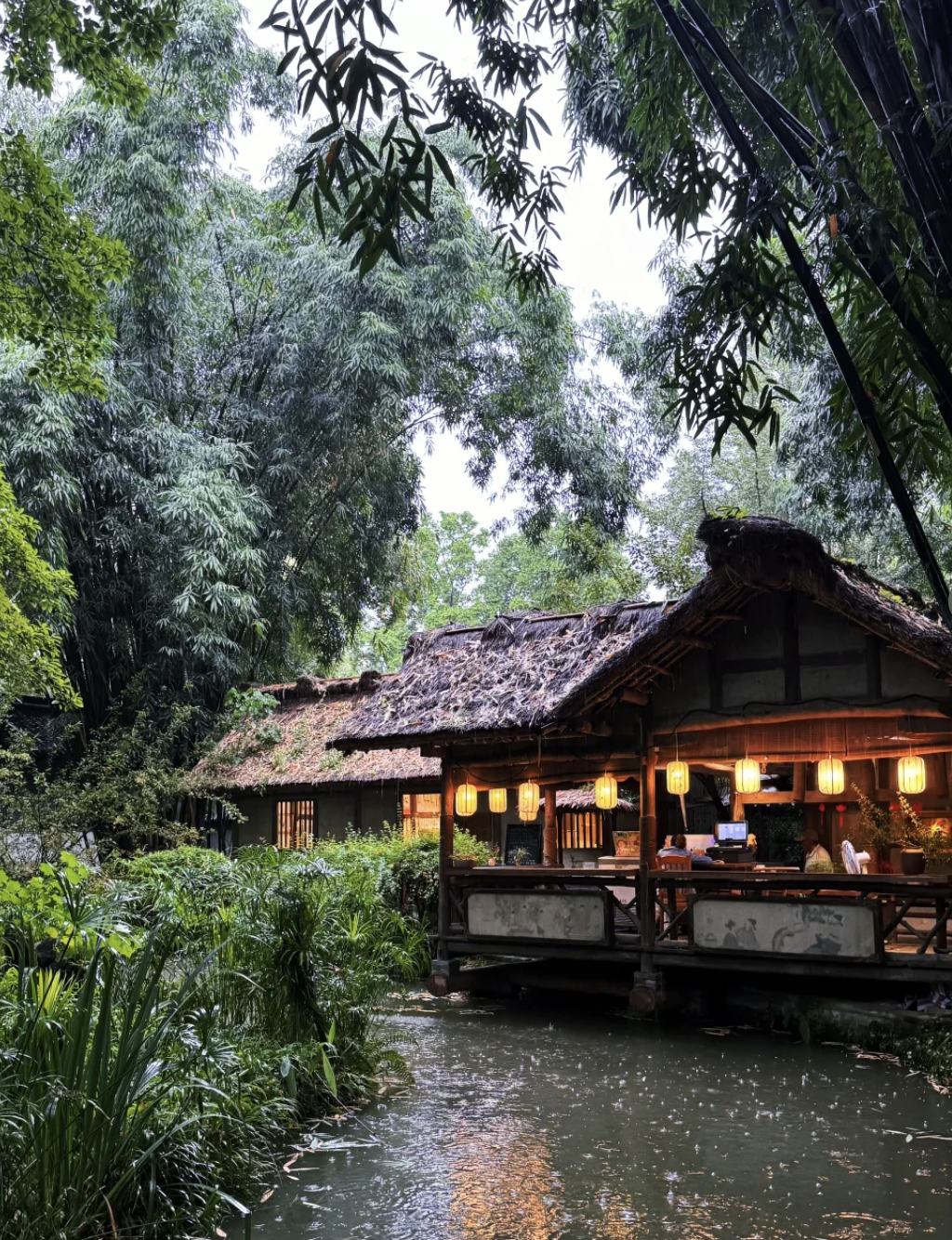
3.Gongbu Shrine (工部祠)
This hall was built during the Ming Dynasty to honor Du Fu, who once served as a Gongbu Official (Minister of Works). Inside are lifelike statues of the poet, displays of ancient manuscripts, and wood-carved plaques engraved with verses.
It’s a place that captures both reverence and intimacy — not just a memorial, but a living space for cultural reflection.
4.Du Fu Poetry Stele Corridor (杜诗碑廊)
Lined with stone tablets carved with Du Fu’s poems and famous calligraphy, this corridor feels like an open-air poetry museum. Each stone bears a verse, its ink and carving styles varying from dynasty to dynasty.
Visitors often pause here, reading aloud lines that have endured for over a millennium — a quiet dialogue between the past and present.
5.The Huanhua Stream and Garden Paths (浣花溪与园林小径)
Beside the cottage flows the Huanhua Stream, its name meaning “Washing Flowers.” The area’s natural charm inspired Du Fu’s writings, and today, it remains a serene escape. The walking paths here are surrounded by bamboo, pavilions, and traditional bridges, creating a quintessential Chengdu garden scene.
📸 It’s also a perfect spot for photography — the reflection of bridges and bamboo in the water captures the true “poetic Chengdu” aesthetic.
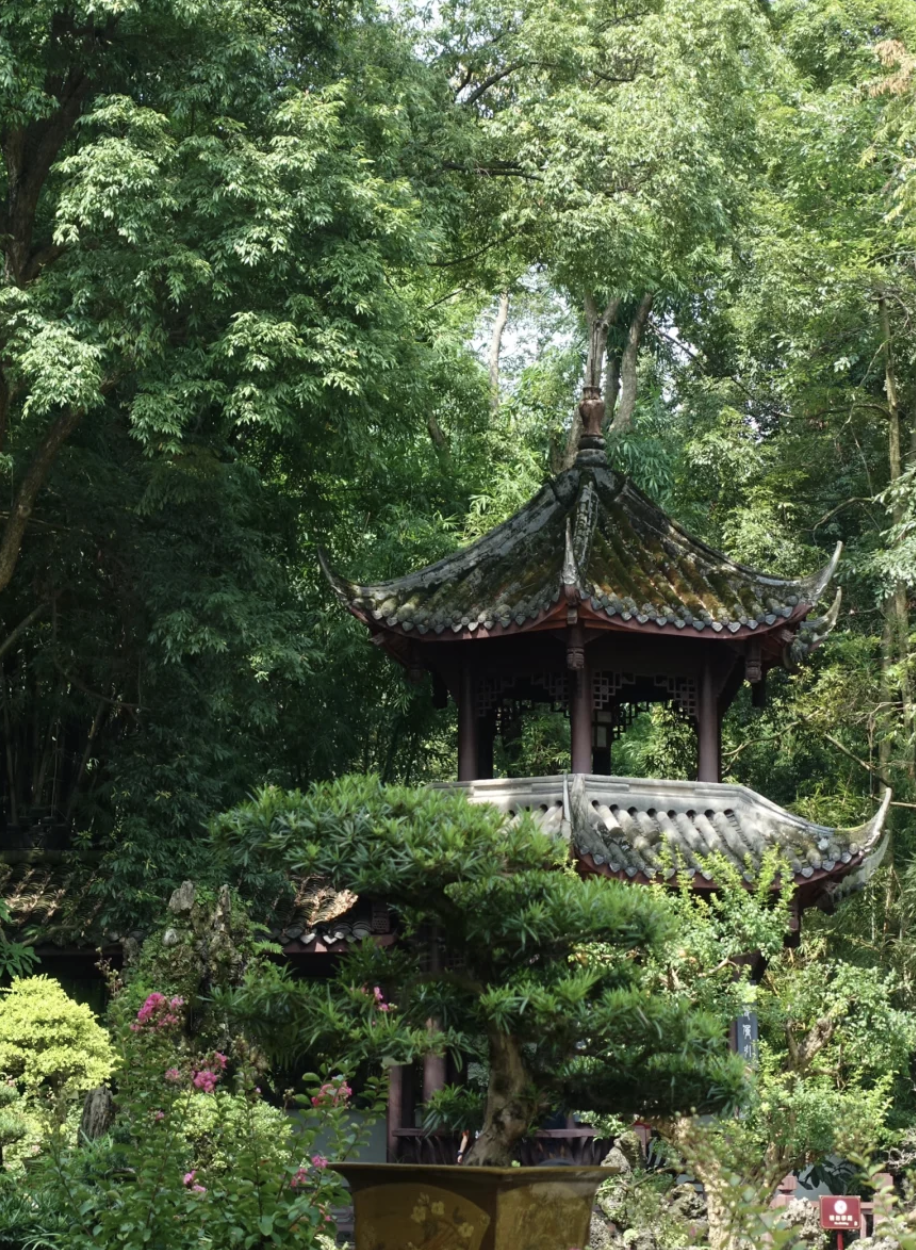
6.Tea Houses and Cultural Corners
There are three tea houses inside Du Fu Thatched Cottage, each with a unique setting — lakeside, courtyard, or bamboo-shaded. Enjoy a cup of jasmine or green tea for about ¥25–¥35, and watch locals reading or sketching quietly nearby.
This experience — sipping tea under the bamboo canopy — perfectly embodies Chengdu’s famous “slow life.”
Cultural Experiences and Hidden Gems
1.Sit and Reflect by the Thatched Hut
Take a seat on one of the wooden benches near the hut, and imagine Du Fu’s life here — modest, reflective, yet deeply compassionate. If you bring a small poetry book or notebook, this is a wonderful place to write or sketch.
💡 Pro Tip: Visit early morning for the most peaceful atmosphere, before tour groups arrive.
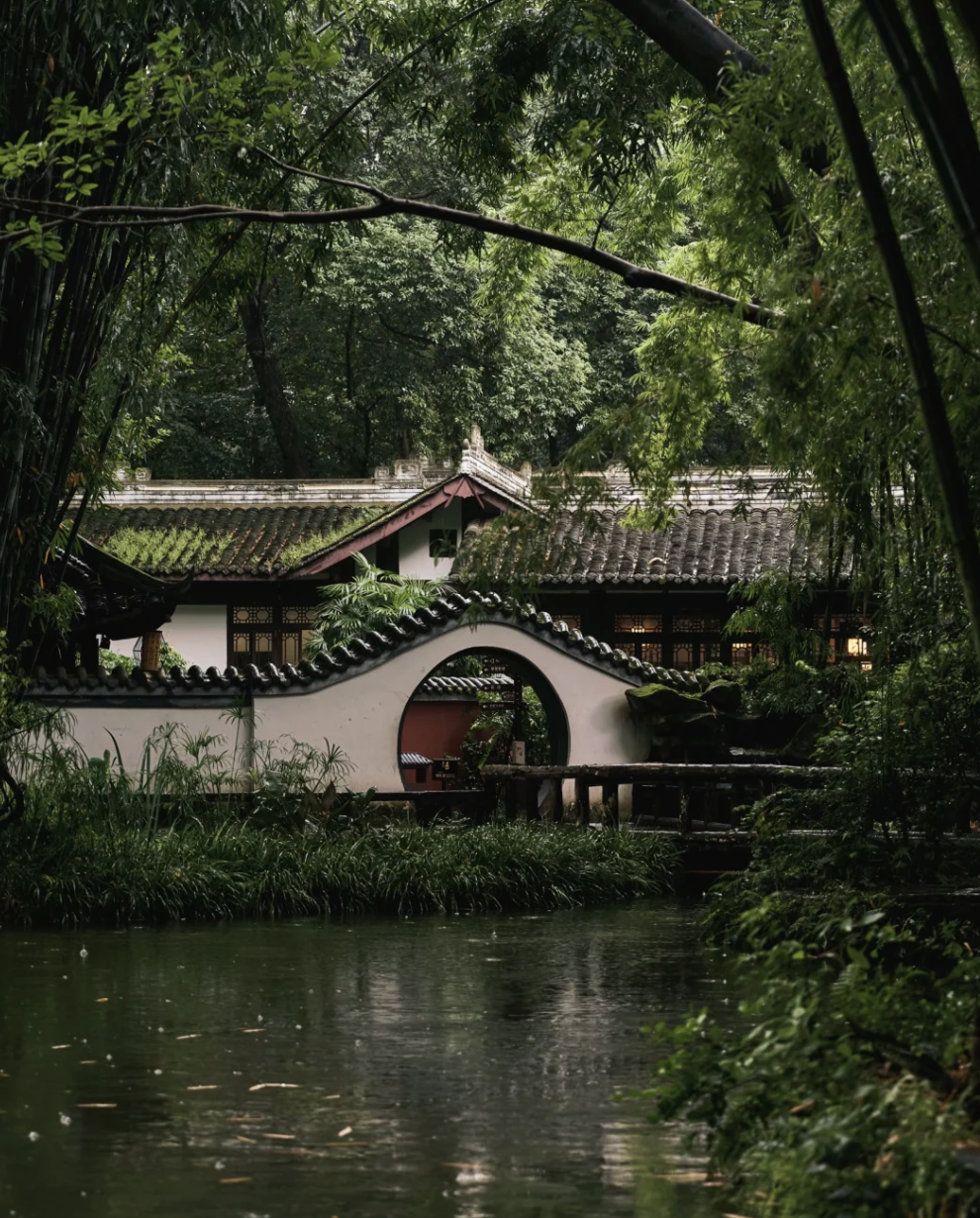
2.Explore the Red Wall and Flower Path (红墙花径)
Similar to the red walls at Wuhou Temple, this corridor is lined with bright vermilion walls and arching bamboo. The contrast of green and red, especially in early sunlight, makes for stunning photos — a favorite spot for traditional-style portraits.
3.Visit the Cultural & Book Restoration Halls
Inside the Cultural and Heritage Center, you’ll find exhibitions about ancient book restoration, woodblock printing, and Tang-era writing tools. You can even observe craftsmen repairing centuries-old texts — a fascinating look at how Chinese cultural heritage is preserved.
Next door, the Gift Shop and Cultural Store sells tasteful souvenirs: poetry-themed bookmarks, scrolls, postcards, and even traditional-style ink brushes. These make meaningful keepsakes for visitors who appreciate literature and art.
4.Listen to the Bamboo Flute (南箫)
If you’re lucky, you might hear an elderly musician playing the bamboo flute in one of the pavilions. The gentle, melancholic notes floating through the air blend perfectly with the setting — it feels as though Du Fu’s spirit still lingers among the bamboo.
5.Accessibility and Comfort
Du Fu Thatched Cottage is thoughtfully designed for all visitors. It offers wheelchair rentals, accessible pathways, and even a mother-and-child room. The park’s calm layout and shaded paths make it especially pleasant in summer — cool, quiet, and refreshing.
Nearby Attractions and Travel Tips
1.Nearby Places to Visit
After your visit, explore these nearby Chengdu attractions:
Kuan Zhai Alley (宽窄巷子): A 10-minute drive — great for food, souvenirs, and traditional courtyards.
Huanhua Stream Park (浣花溪公园): Adjacent to the cottage — ideal for a relaxing walk or picnic.
Wuhou Temple & Jinli Street: About 4–5 km away — combine history and evening street life for a full-day itinerary.
2.Dining Recommendations
After your poetic journey, head to nearby restaurants or tea houses for authentic Sichuan cuisine. Try:
Zhong Shui Dumplings (钟水饺) — delicate dumplings in chili oil
Dan Dan Noodles (担担面) — spicy and nutty local noodles
Vegetarian dishes at nearby temple-style eateries for a peaceful lunch
3.Best Time to Visit
Morning (8–10 AM): Quiet, best lighting for photos.
Spring (March–May) or Autumn (September–November): Comfortable weather and lush greenery.
Summer: Shaded bamboo paths make it cool even in warm months.
4.Travel Tips
Bring a book: Reading Du Fu’s poems on-site makes the experience more meaningful.
Photography: Use natural light; the bamboo creates beautiful patterns in early morning.
Tickets: Purchase at the gate or via the official WeChat mini-program.
Time: Allocate 1.5–2 hours for a relaxed visit.
FAQs About Du Fu Thatched Cottage
1.Who was Du Fu?
Du Fu (712–770 AD) was one of China’s greatest poets, known as the “Poet Sage.” He lived during the Tang Dynasty and wrote deeply emotional works reflecting the hardships of his time.
2.Why is Du Fu Thatched Cottage famous?
It’s where Du Fu lived in Chengdu and composed many of his most famous poems, making it both a historical and literary landmark.
3.How much time do I need to visit?
Around 1.5 to 2 hours is ideal to explore the gardens, museum halls, and tea houses.
4.Can I buy souvenirs inside?
Yes, there are several gift shops selling poetry-themed cultural products, books, and local crafts.
5.Is it suitable for children or seniors?
Yes — the site is flat, shaded, and has plenty of benches and accessible paths.