Section 2: The Heart of Dujiangyan — Ancient Wisdom in Modern Times
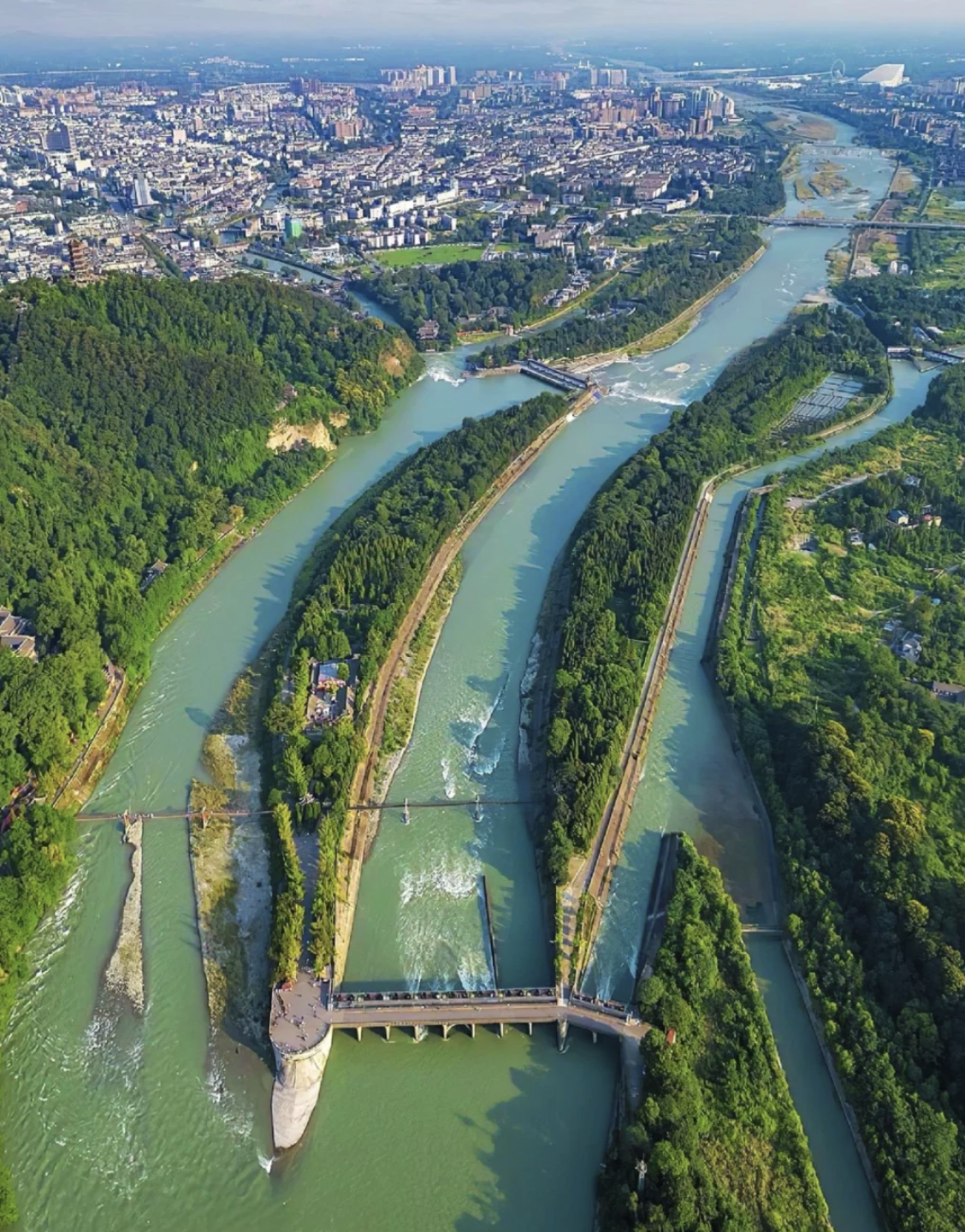
The Dujiangyan Irrigation System was built in 256 BC by Li Bing and his son, legendary engineers of the Qin Dynasty. Their design forever changed Chinese agriculture and water management — and it’s still in operation today!
Instead of building dams to block the river, Li Bing used the river’s natural flow to control flooding and distribute water — a design based on the philosophy of “following nature rather than fighting it.”
1.The Three Core Engineering Wonders
(1) Fish Mouth Levee (鱼嘴分水堤)
The levee divides the Min River into two branches:
Inner River: Narrow and deep, carries water into Chengdu for irrigation.
Outer River: Wide and shallow, releases floodwaters downstream.
This “60/40 water split” system automatically regulates water flow between flood and drought seasons — no human intervention needed.
(2) Flying Sand Weir (飞沙堰)
This curved channel uses hydrodynamic whirlpools to filter out sediment, keeping the irrigation water clear. The result? Reduced maintenance and fertile farmland downstream.
(3) Bottle-Neck Channel (宝瓶口)
A man-made opening carved into Mount Yulei, controlling how much water enters the irrigation system. Its shape — like a bottle neck — regulates pressure and water flow naturally.
💡 Insight: These designs showcase ancient Chinese wisdom — flexible, harmonious, and deeply respectful of nature. Even today, engineers study Dujiangyan for lessons in sustainable development.
2.The Two Kings Temple (二王庙)
Dedicated to Li Bing and his son, this temple honors their engineering genius. The complex features classic Qing Dynasty architecture, vibrant murals, and a 1,000-year-old ginkgo tree that turns golden in autumn.
Visitors often stop to pray for wisdom and good fortune, following the local belief that “those who respect the water will live in peace.”
📸 Photo Tip: Capture the temple roof with the Min River below — a perfect mix of culture and landscape.
3.Anlan Suspension Bridge (安澜索桥)
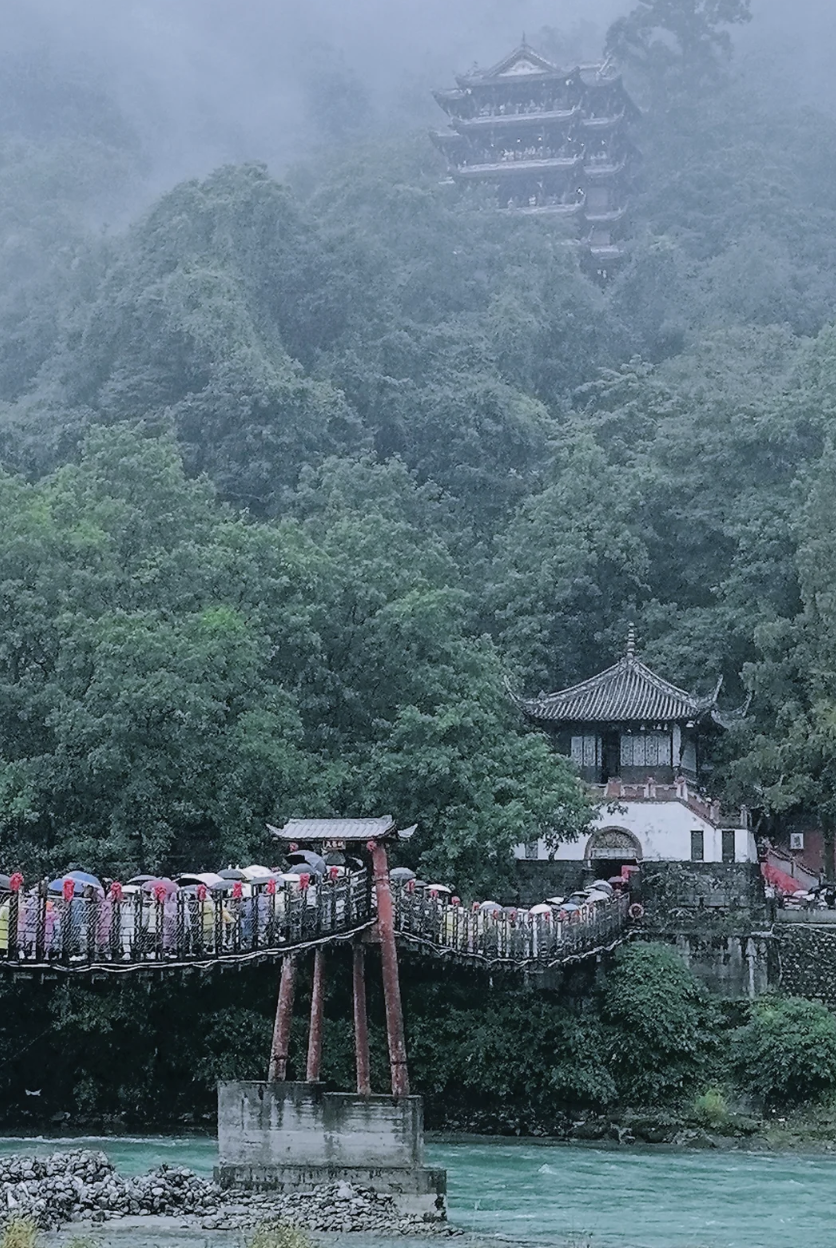
Known as the “Bridge of Tranquility,” this bamboo-and-iron suspension bridge sways gently above the Min River. Crossing it can be both thrilling and fun — hold tight if you’re afraid of heights! On the opposite bank, you’ll find the best vantage point to see the Fish Mouth Levee and Flying Sand Weir.
💡 Fun Fact: The bridge was originally made entirely of bamboo ropes over 1,000 years ago!
4.Yulei Pavilion (玉垒阁)
If you’re up for panoramic views, take the cable car (¥40) or hike to Yulei Pavilion, perched high on Mount Yulei. From here, the entire Dujiangyan project unfolds before your eyes — winding rivers, levees, bridges, and distant cityscapes.
It’s a breathtaking reward for photography lovers and one of the best sunset spots in western Chengdu.
Section 3: Ancient Charm Beyond the Dam — Old Streets, Food, and Culture
Dujiangyan isn’t just an engineering site — it’s a living town steeped in Sichuan lifestyle, from ancient streets to local delicacies. After exploring the irrigation system, take a slow stroll through Guanxian Ancient Town (灌县古城) and its surroundings.
1.Guanxian Ancient Town
This town dates back to the Ming Dynasty and preserves the nostalgic charm of old Sichuan life. Walk along stone-paved lanes lined with teahouses, calligraphy shops, and traditional guesthouses. The ancient city walls and West Street (西街) are great for exploring local crafts and souvenirs.
🥢 Must-Try Local Snacks:
Spicy Rabbit Head (尤兔头) – Chengdu’s most famous street food delicacy.
Congcong Roll (葱葱卷) – Crispy pancake filled with scallions.
Zhang Laozao Rice Wine (张醪糟) – A sweet fermented rice drink perfect for dessert.
2.Songmao Ancient Path (松茂古道)
This peaceful trail was once part of the Tea Horse Road, connecting Sichuan to Tibet. Today, it’s a quiet walkway full of history and ideal for photography. The moss-covered stone steps, rustic tea stalls, and shaded trees create an atmosphere straight out of a Chinese painting.
3.South Bridge (南桥) — Night Scenery and “Blue Tears”
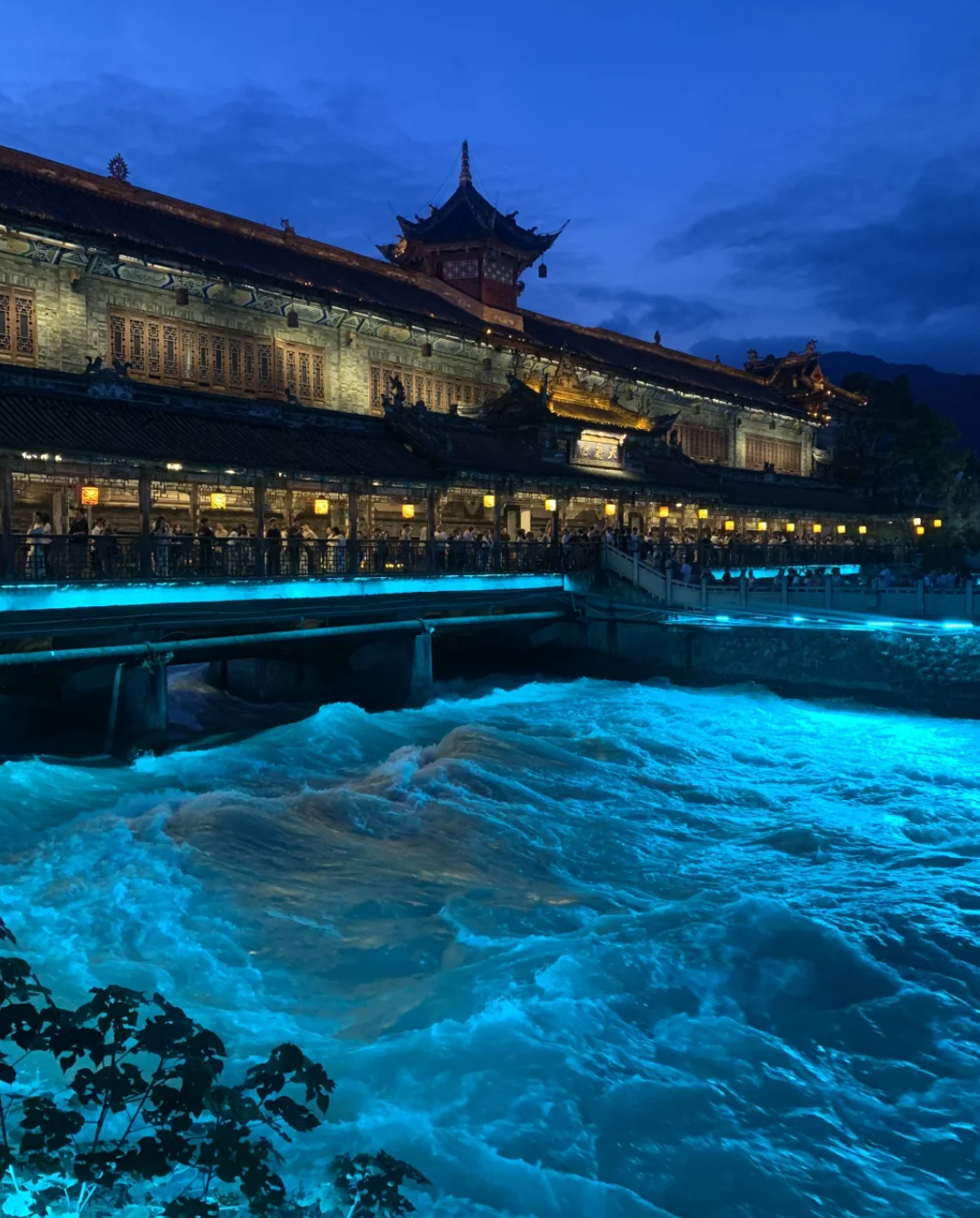
By night, South Bridge becomes a romantic landmark, illuminated by soft blue lights that shimmer on the Min River — known as the “Blue Tears.” Locals and photographers gather around 8:00 PM to watch this glowing spectacle.
💡 Pro Tip: Visit during the evening golden hour — you’ll catch both daylight photos and night reflections.
4.Yangtianwo Square (仰天窝广场)
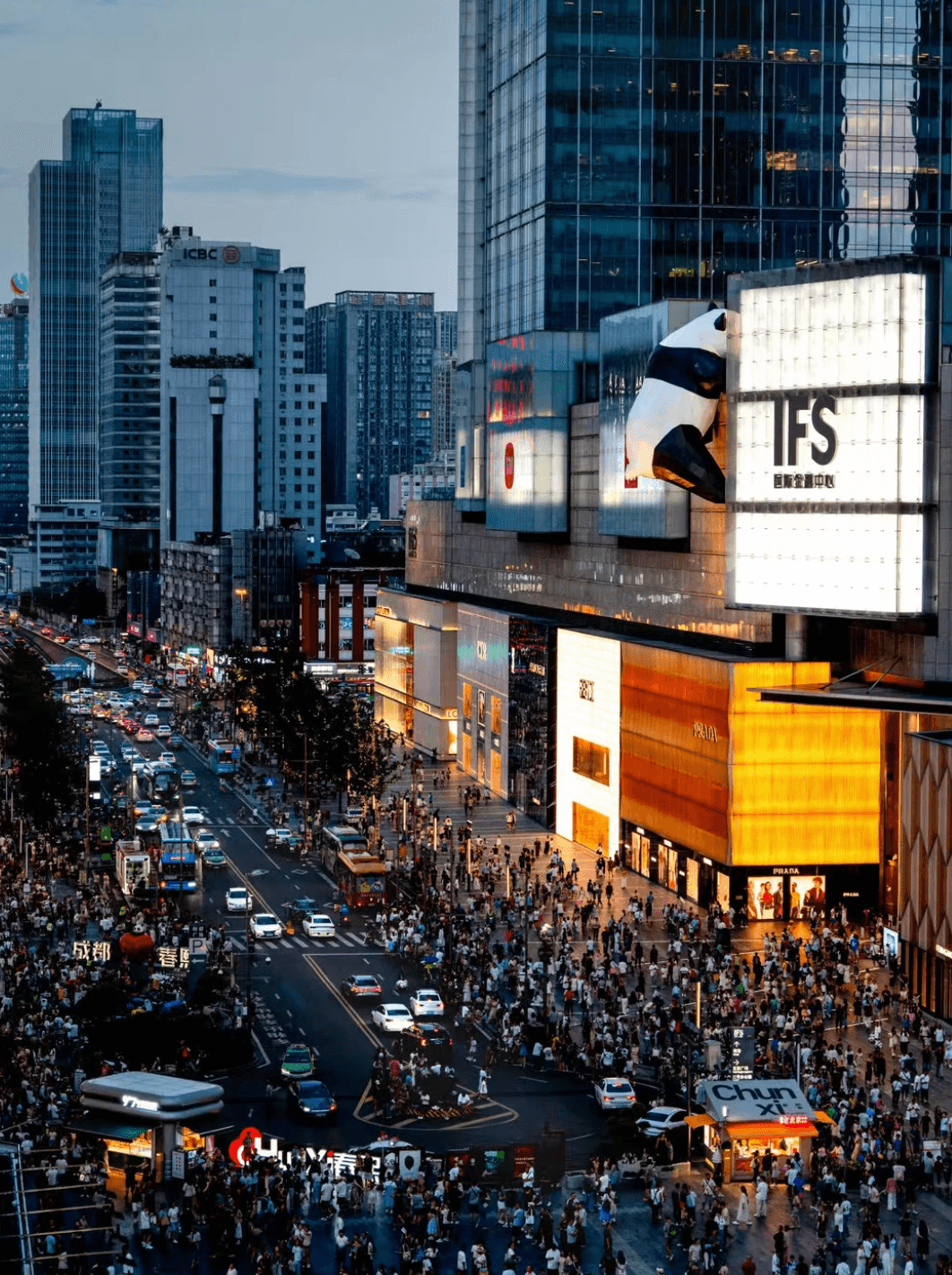
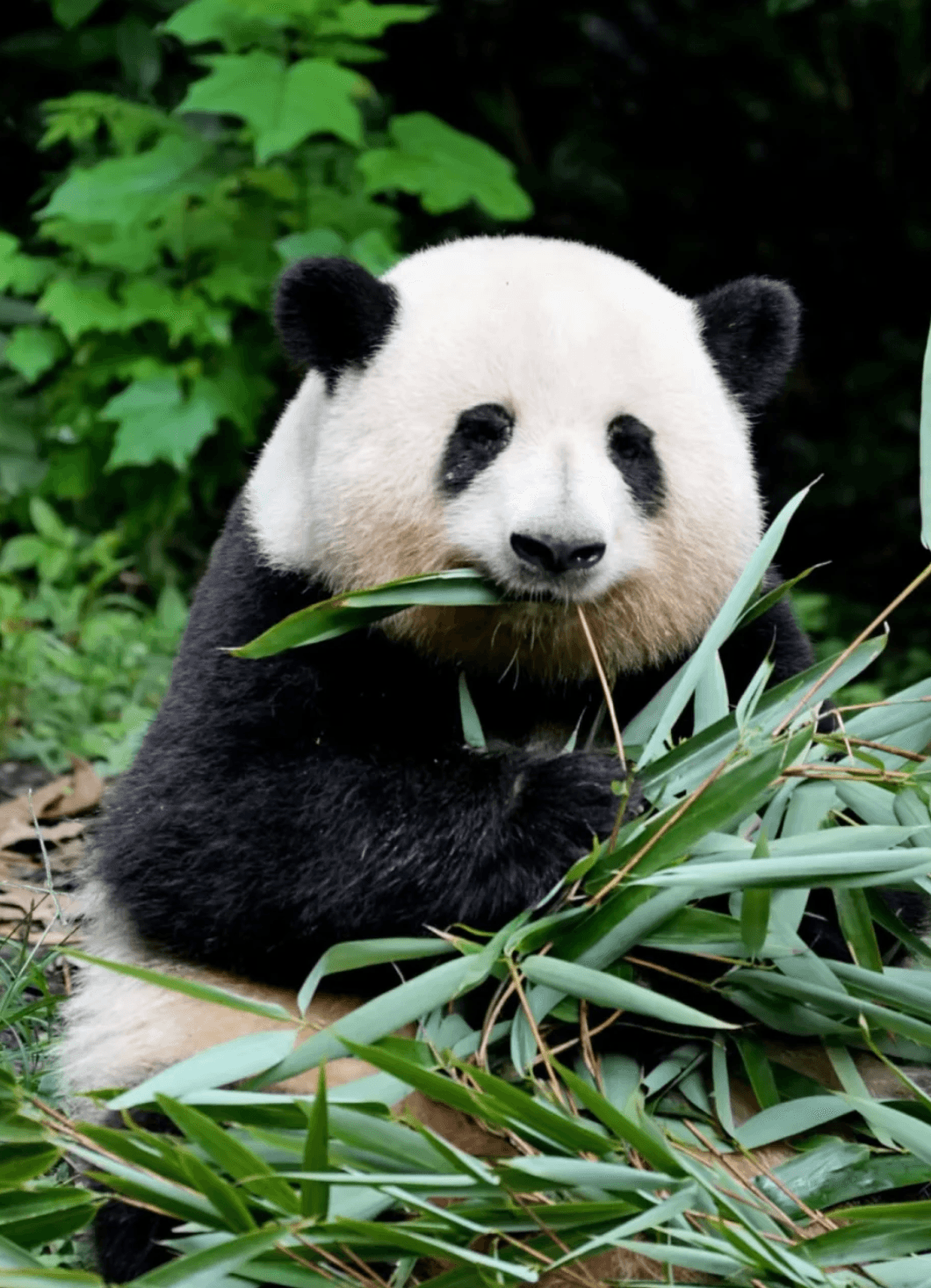
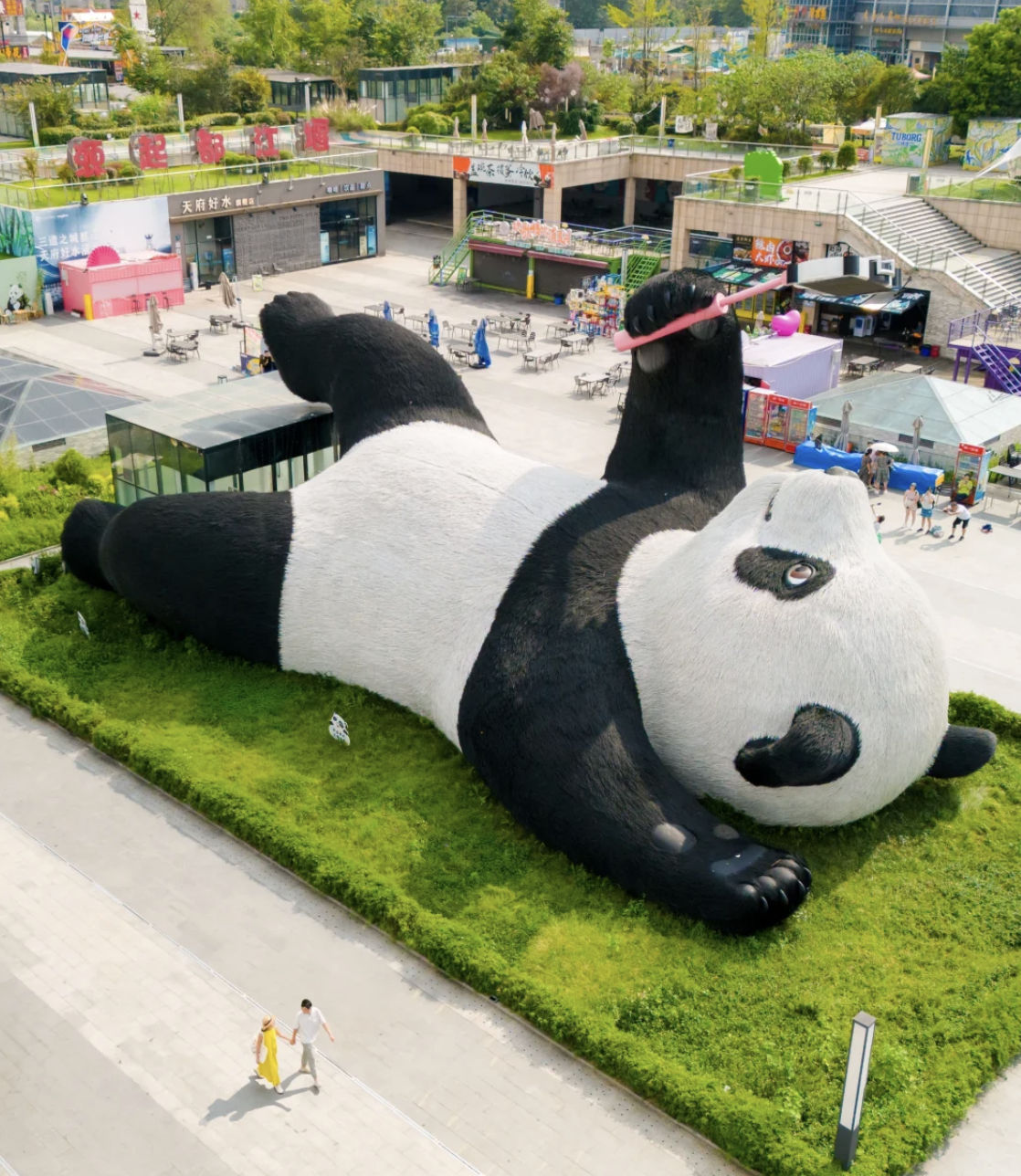
Before leaving, stop by Yangtianwo Square, home to the iconic giant panda sculpture — a local selfie hotspot and social media favorite. It’s fun, quirky, and perfectly captures Dujiangyan’s modern-meets-traditional vibe.
Perfect Itinerary — How to Spend One Day in Dujiangyan
If you’re coming from Chengdu or Panda Valley, here’s the perfect one-day itinerary to make the most of your visit:
🕗 Morning (8:00–10:30 AM):
Take the train from Chengdu Xipu to Lidui Park Station and head straight to Qinyan Tower for panoramic views of the irrigation system.
🕙 Late Morning (10:30 AM–12:00 PM):
Walk down to visit Fish Mouth Levee, Flying Sand Weir, and Bottle-Neck Channel, followed by the Two Kings Temple.
🍜 Lunch (12:00–1:00 PM):
Enjoy Sichuan cuisine at a nearby restaurant — try local mapo tofu, cold noodles, or rabbit head for an authentic taste of Chengdu flavor.
🕐 Afternoon (1:30–4:00 PM):
Cross the Anlan Bridge, stroll through Songmao Ancient Path, and explore Guanxian Old Town for souvenirs.
🌆 Evening (5:00–7:30 PM):
Head to South Bridge for night lights and finish your day at Yangtianwo Square for photos with the giant panda.
💡 Extra Tip: For a more relaxed pace, spend the night in Dujiangyan and visit nearby Mount Qingcheng (青城山) the next day — another UNESCO site known for Taoist culture and misty peaks.
FAQs About Dujiangyan City
1.What makes Dujiangyan famous?
It’s the world’s oldest functioning non-dam irrigation system, designed over 2,000 years ago and still benefiting millions today.
2.How long does a visit take?
Plan 2–3 hours for the irrigation site, and half a day if you include the old town and South Bridge.
3.Is it suitable for kids or seniors?
Yes — take the Qinyan Tower route for a mostly downhill walk. It’s easy and scenic.
4.What’s the best time to visit?
Spring and autumn (March–May, September–November) for mild weather and clear views.
5.Can I visit after Panda Valley?
Absolutely — Dujiangyan is just 30–40 minutes away from Chengdu’s Panda Valley.