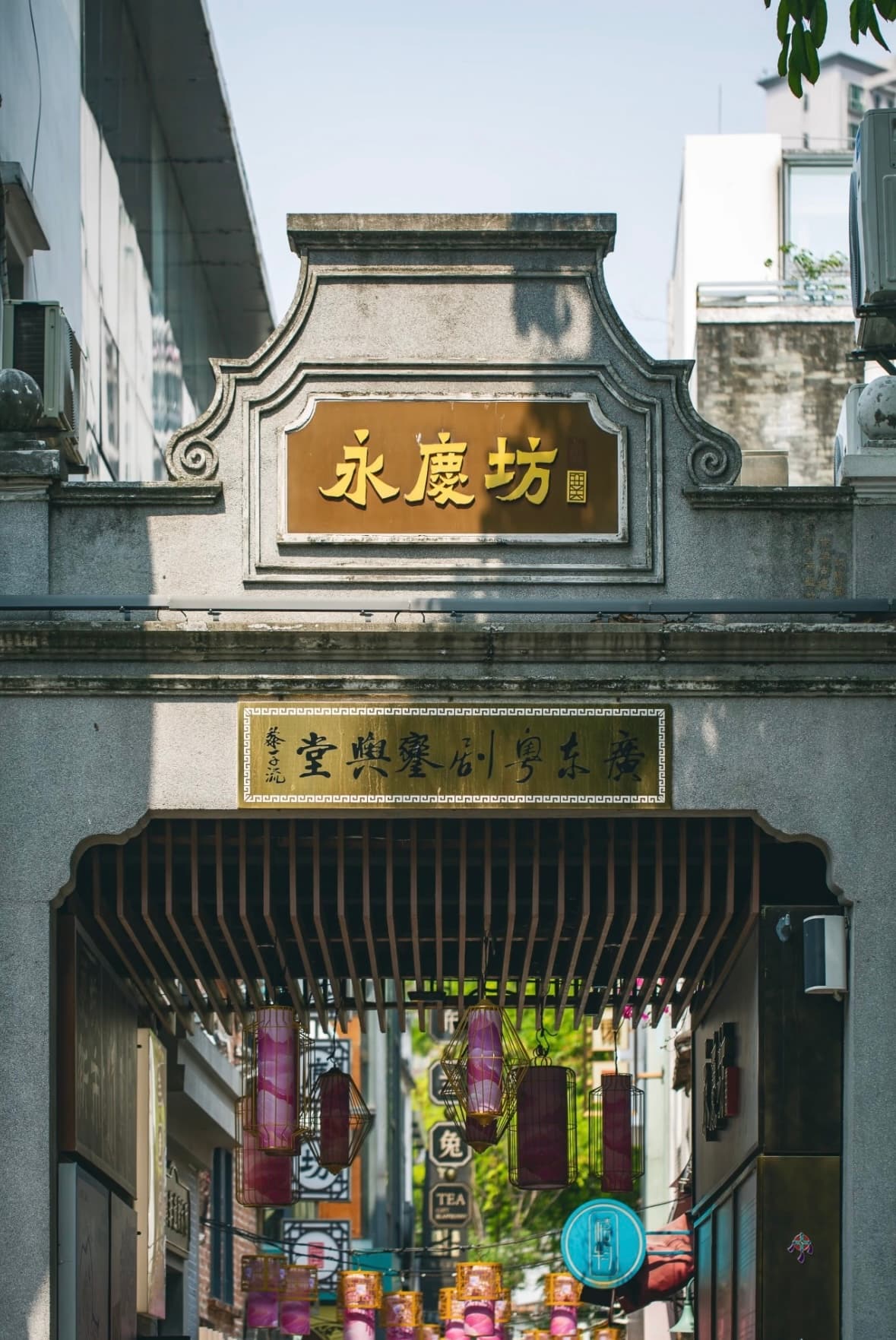
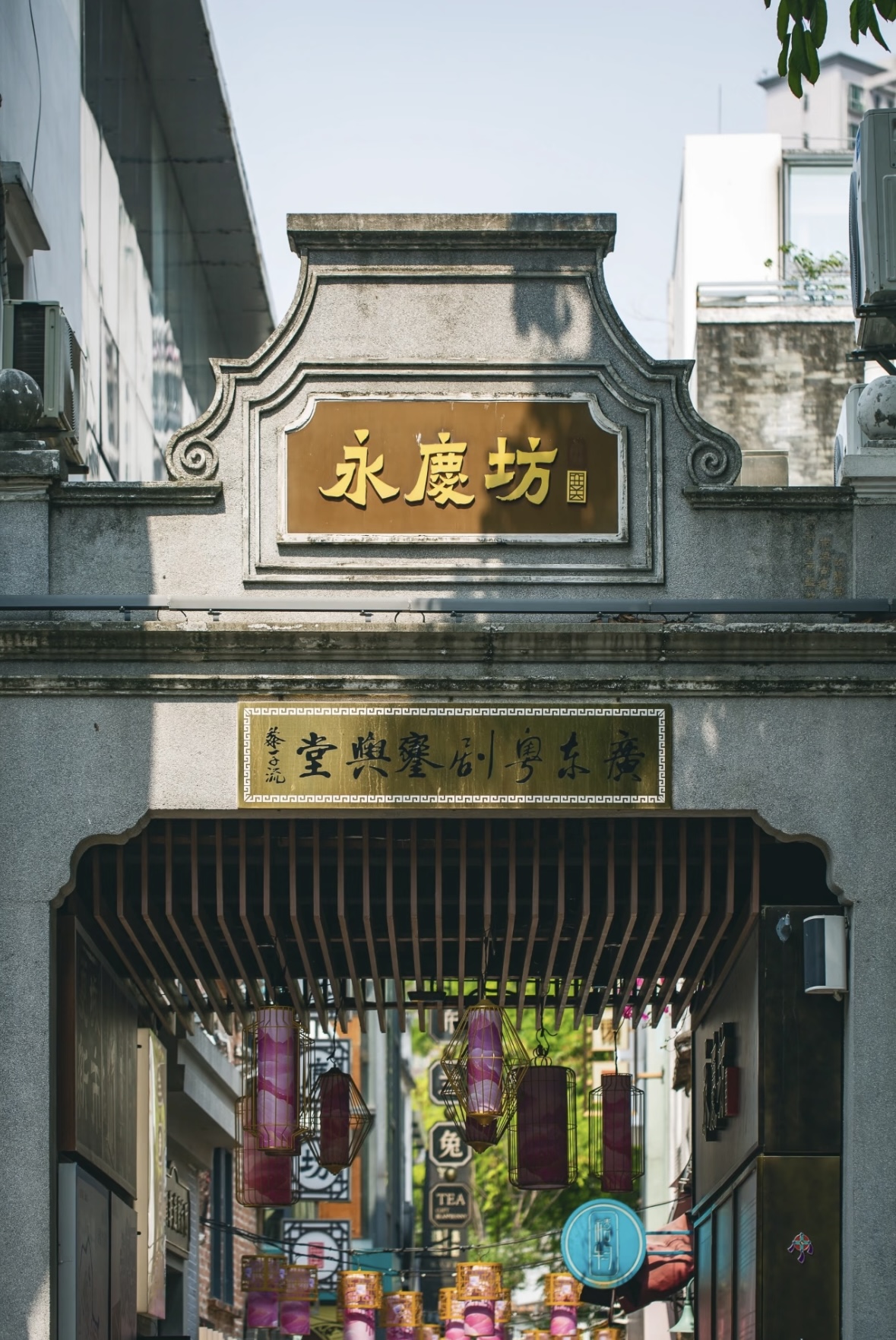
Yongqing Fang Guangzhou guide with maps, attractions, and walking routes. Learn how to get there and what to see in one of Guangzhou’s most beautiful historic districts.
Guangzhou is one of China’s oldest trading cities, with more than two thousand years of history. While modern districts such as Zhujiang New Town show the city’s contemporary skyline, the older neighborhoods reveal a very different side of Guangzhou.
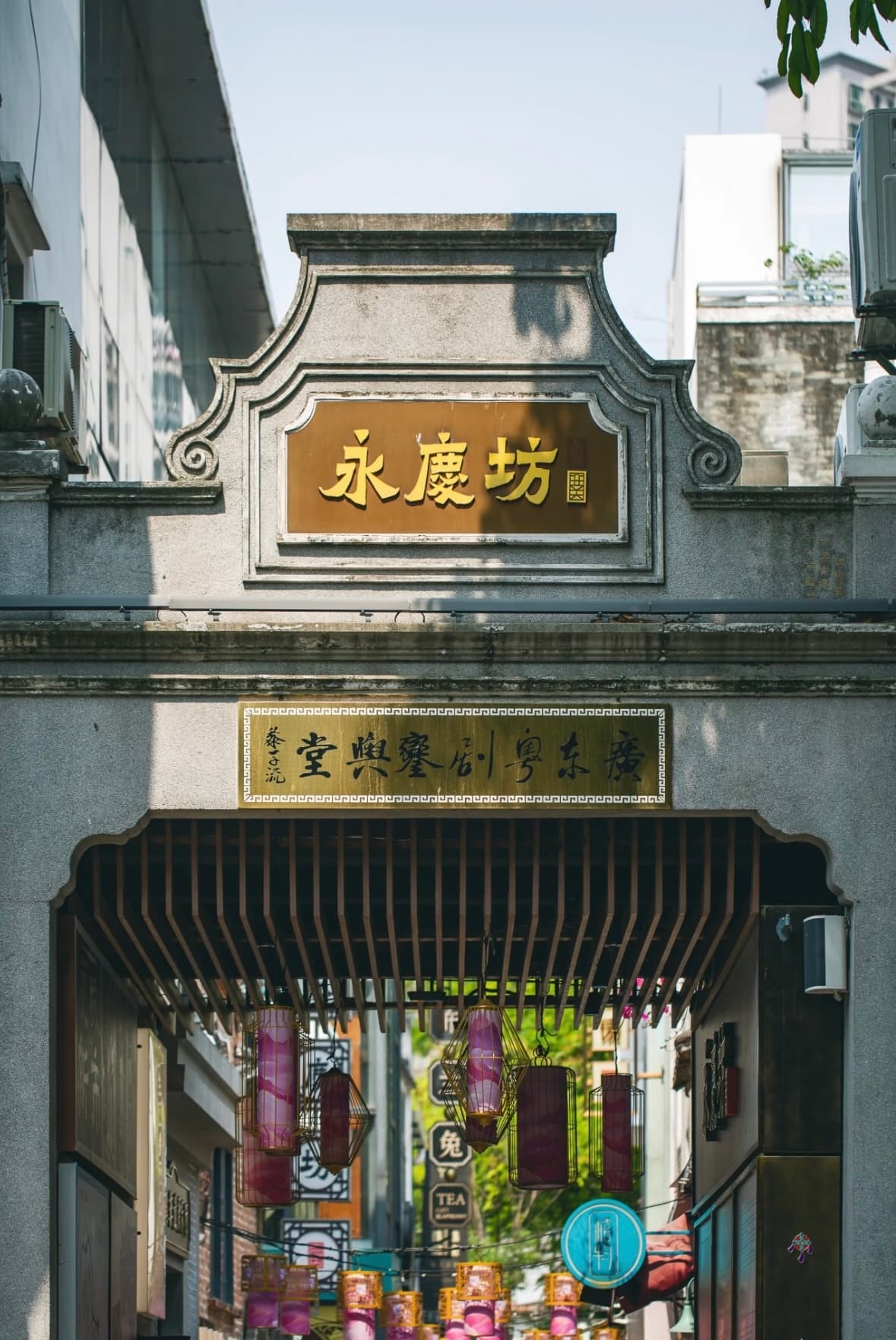
Yongqing Fang is one of the best places to experience that historic atmosphere. Located in the Xiguan area of Liwan District, this neighborhood preserves traditional Lingnan architecture while introducing modern cultural spaces, galleries, and cafés.
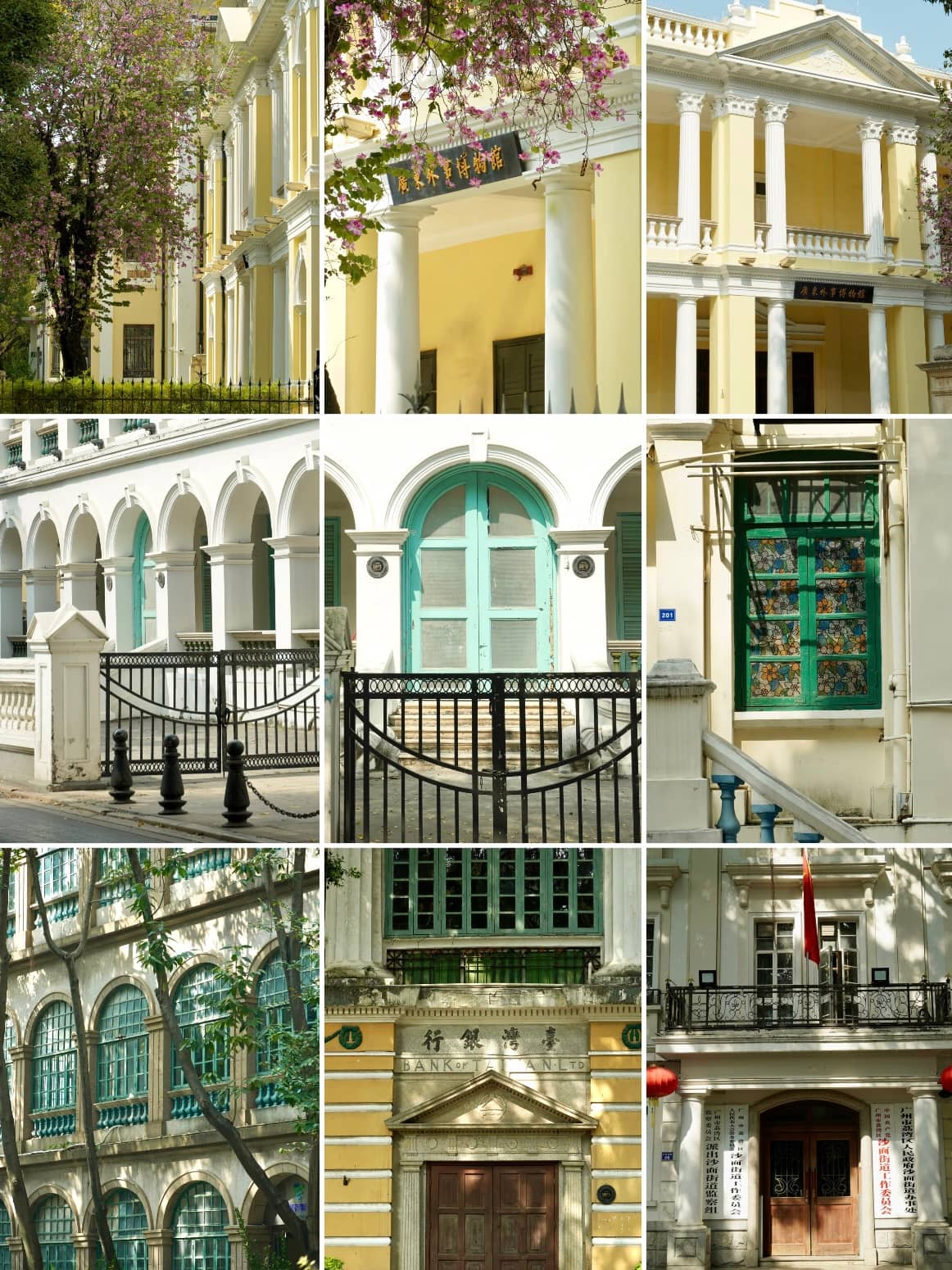
The streets around Enning Road once formed one of the most prosperous residential areas in Guangzhou. Wealthy families built traditional Xiguan mansions here, while merchants operated shops under arcaded buildings designed for the subtropical climate.
Where Yongqing Fang Is and How to Get There
Yongqing Fang is located along Enning Road in Liwan District, one of the oldest neighborhoods in Guangzhou. This area is part of the historic Xiguan district, which developed during the Qing Dynasty as a residential and commercial center.
Many historic buildings still stand here today, making the district one of the most important cultural areas in the city.The easiest way to reach Yongqing Fang is by metro.
Metro Access
Visitors can take Guangzhou Metro Line 1 or Line 6 to Huangsha Station.After leaving the station through Exit B, the walk to Yongqing Fang takes about ten minutes.Clear signs guide visitors toward Enning Road, which forms the central street of the district.Because the area has become a popular cultural destination, the route from the metro station is easy to follow.
Taxi and Ride Hailing
Visitors traveling by taxi can search for Yongqing Fang or Enning Road on navigation apps.Drivers in Guangzhou are familiar with the destination because it has become one of the city’s most visited cultural districts.
Nearby Attractions
Several historic areas surround Yongqing Fang.
Shangxiajiu Pedestrian Street is located nearby and offers traditional shopping streets filled with local snacks and retail stores.
The Liwan Canal area also provides scenic walking routes along historic waterways.
Many travelers combine these locations into one walking tour of old Guangzhou.
Must See Attractions in Yongqing Fang
Yongqing Fang contains several cultural landmarks that reveal the history and artistic traditions of Guangzhou.
Moon Bridge
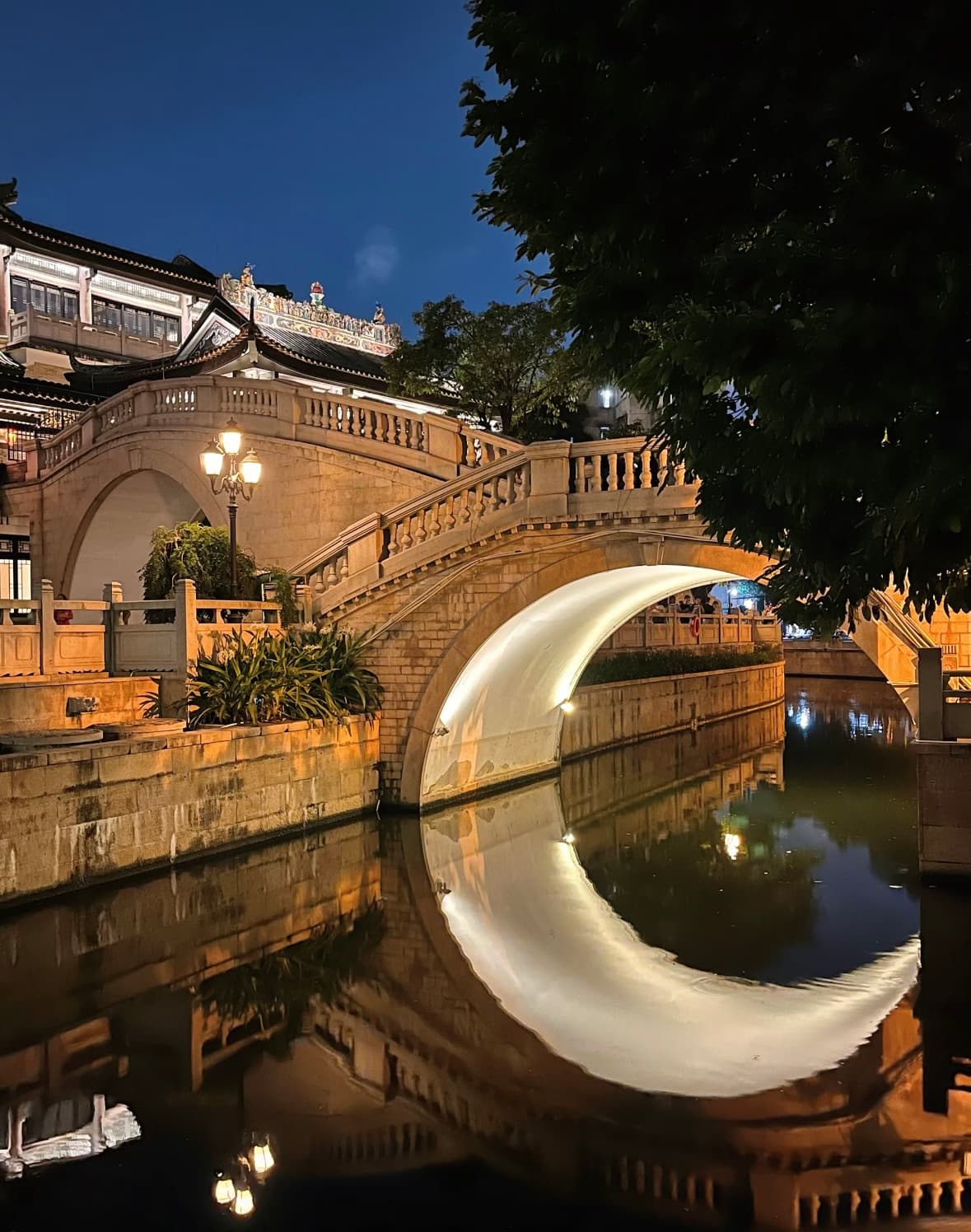
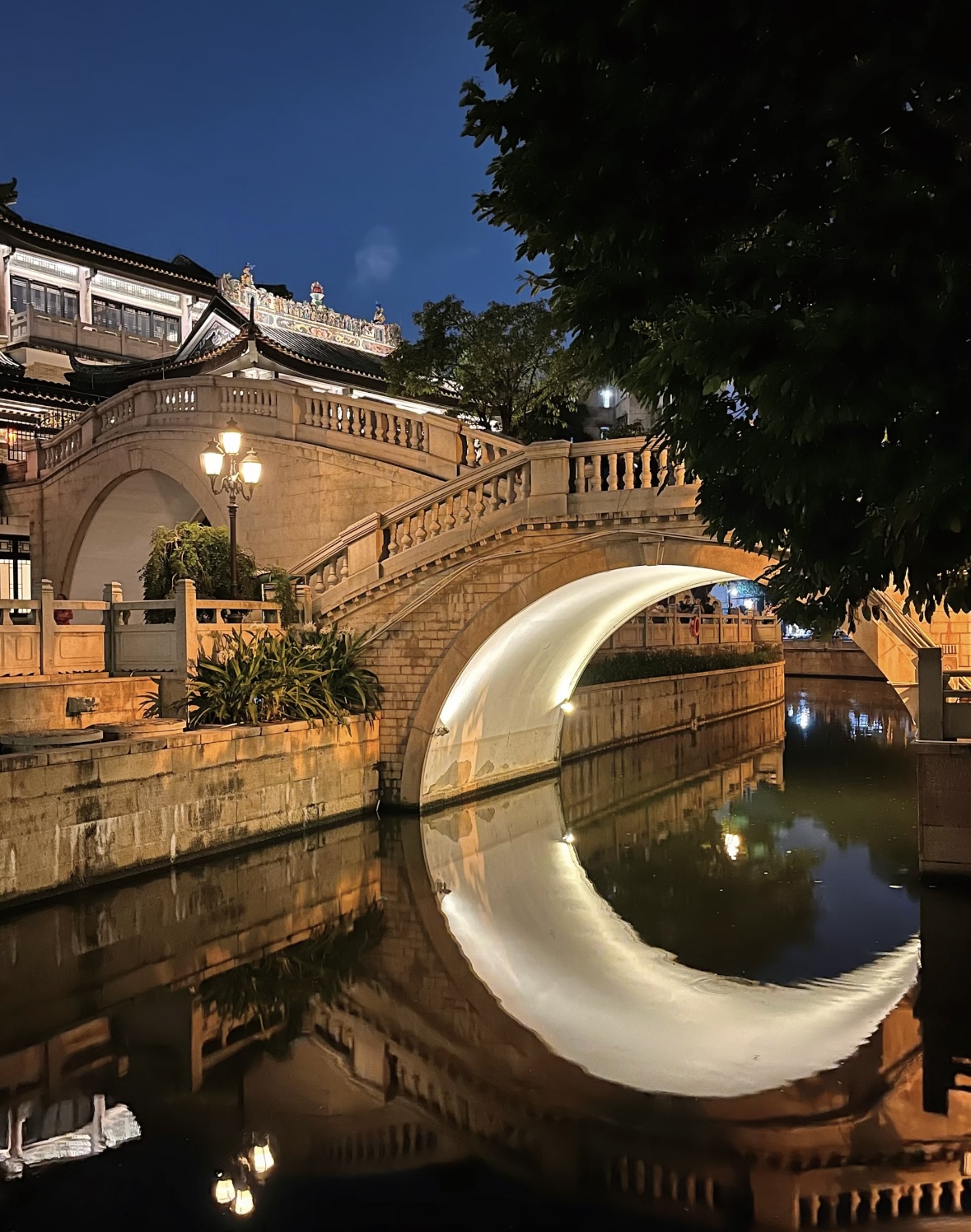
Moon Bridge is one of the most photographed locations in the district.
At night the bridge lighting reflects on the water below, forming a circular shape that resembles a full moon.
Many visitors stand on the opposite side of the canal to photograph the bridge and its reflection.
The scene becomes especially atmospheric after sunset when the lights illuminate the surrounding historic buildings.
Cantonese Opera Art Museum
The Cantonese Opera Art Museum is one of the most impressive cultural sites in the area.
Entrance to the museum is free, and the complex itself is designed in traditional Lingnan architectural style.
The museum includes pavilions, small bridges, and garden courtyards arranged around water features.
Inside the exhibition halls visitors can learn about the history of Cantonese opera, one of southern China’s most famous performing arts traditions.
Short opera performances sometimes take place inside the complex, offering visitors a chance to experience the art form directly.
Bruce Lee Ancestral Home
Another important landmark in Yongqing Fang is the ancestral home of Bruce Lee.
The house was built by Bruce Lee’s father, Lee Hoi Chuen, a well known Cantonese opera performer.
The residence reflects the style of traditional Xiguan mansions once common in Guangzhou.
Inside the building visitors find exhibitions about Bruce Lee’s life, career, and cultural influence.
For many international visitors, this location represents an interesting connection between Guangzhou and one of the most famous martial artists in the world.
Xiguan Arcade Buildings
Walking along Enning Road and nearby streets reveals rows of traditional arcade buildings known as qilou.
These buildings combine residential and commercial spaces under covered walkways.
The design protects pedestrians from rain and strong sunlight while allowing shops to operate along the street.
Qilou architecture developed across southern China and Southeast Asia, but Guangzhou remains one of the best places to see well preserved examples.
Recommended Walking Route in Yongqing Fang
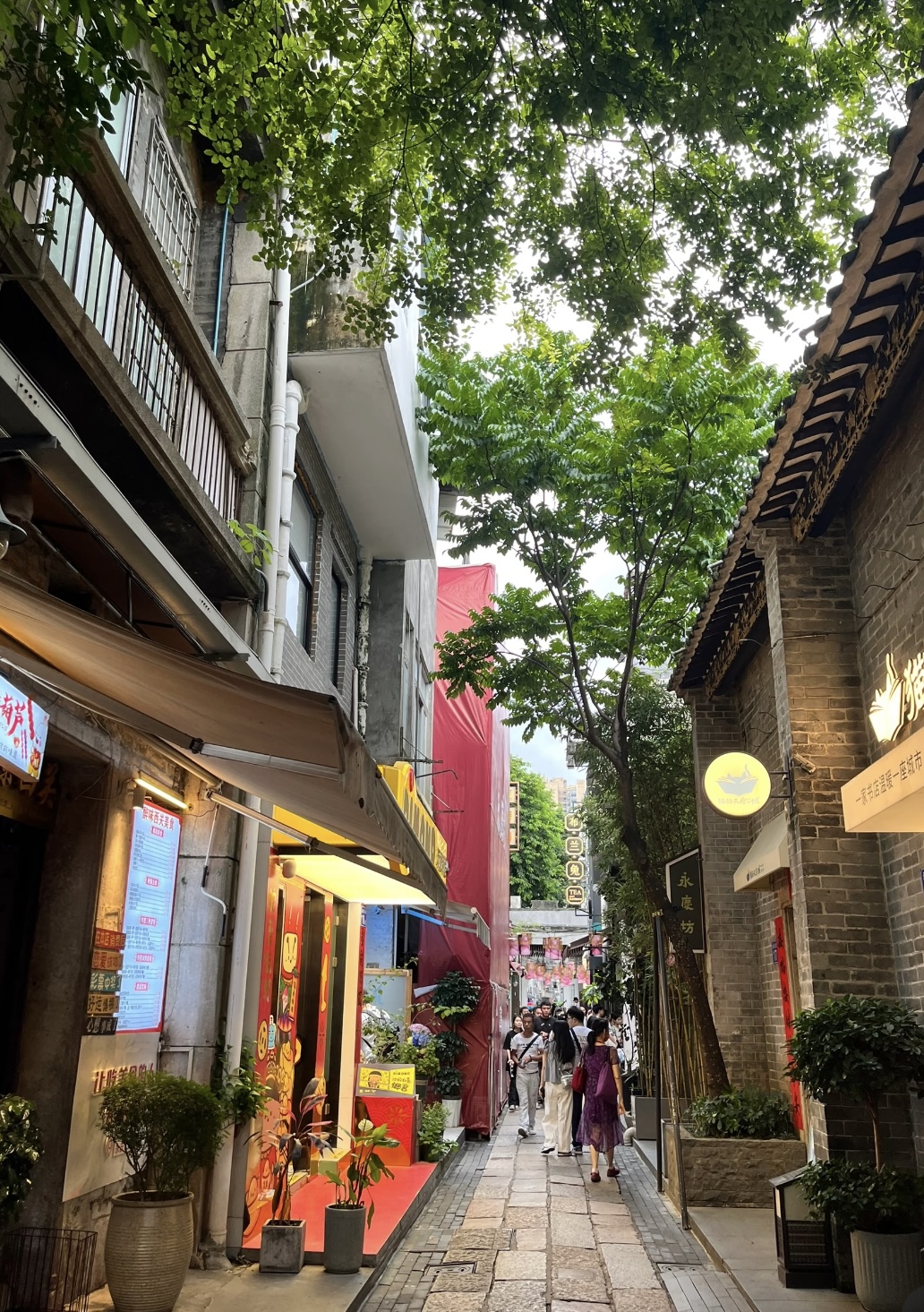
Yongqing Fang is best explored on foot. Most attractions lie within a short distance, making the district ideal for a relaxed city walk.
A simple route allows visitors to see the most important landmarks.
Start the walk at the entrance of Enning Road.
From here proceed toward the Cantonese Opera Art Museum. The museum complex offers a calm environment with traditional garden architecture.
After exploring the museum continue walking toward Moon Bridge. This area forms the visual centerpiece of the district and is especially popular for photography.
Next visit the Bruce Lee Ancestral Home located nearby.
Afterward continue walking along Enning Road and nearby streets to see rows of Xiguan arcade buildings and restored historic houses.
Many visitors also explore small cultural shops and cafés along the street before leaving the district.
A typical visit lasts about one and a half to two hours depending on how much time visitors spend inside museums and exhibition spaces.
Tips for Visiting Yongqing Fang
Yongqing Fang attracts many visitors during weekends and holidays. Travelers who prefer a quieter environment often visit on weekday afternoons.
The district becomes particularly atmospheric during the evening when lights illuminate the canals and historic buildings.
Photography conditions improve significantly after sunset, especially around Moon Bridge.
Because the area preserves many historic structures, visitors should avoid touching fragile architectural details and respect cultural heritage protection rules.
Comfortable walking shoes are recommended since most of the district is explored on foot.
Why Yongqing Fang Is One of Guangzhou’s Most Charming Historic Districts
Yongqing Fang represents an important example of how historic neighborhoods can be preserved while adapting to modern urban life.
Instead of replacing old buildings with new construction, the district restored traditional houses and introduced cultural spaces that attract visitors.
Walking through the area reveals layers of Guangzhou’s history, from traditional Xiguan mansions to contemporary art spaces.
For travelers interested in architecture, culture, and photography, Yongqing Fang offers one of the most memorable city walks in Guangzhou.
It provides a rare opportunity to experience the atmosphere of old Canton while still enjoying the creativity and energy of a modern cultural district.