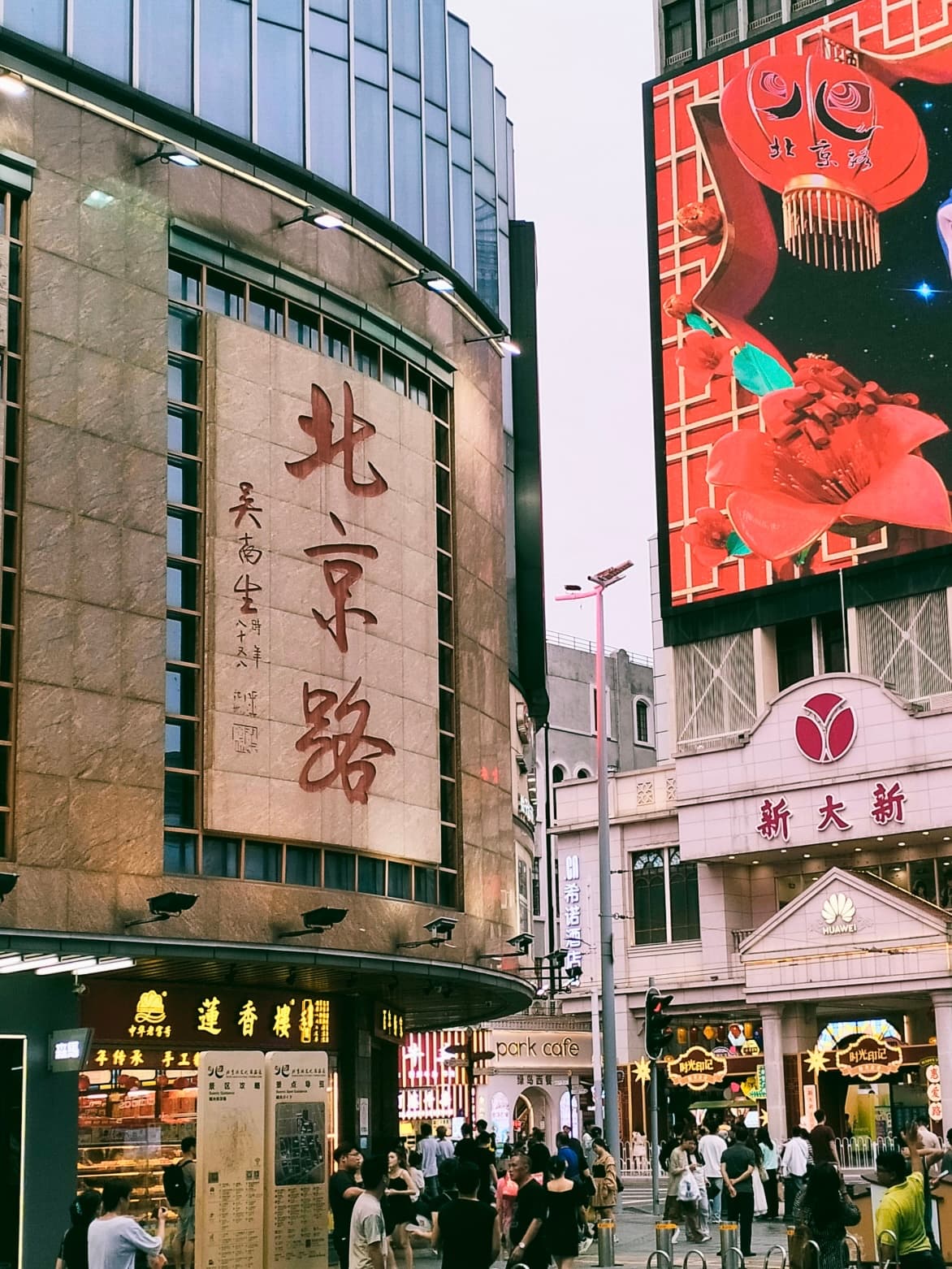
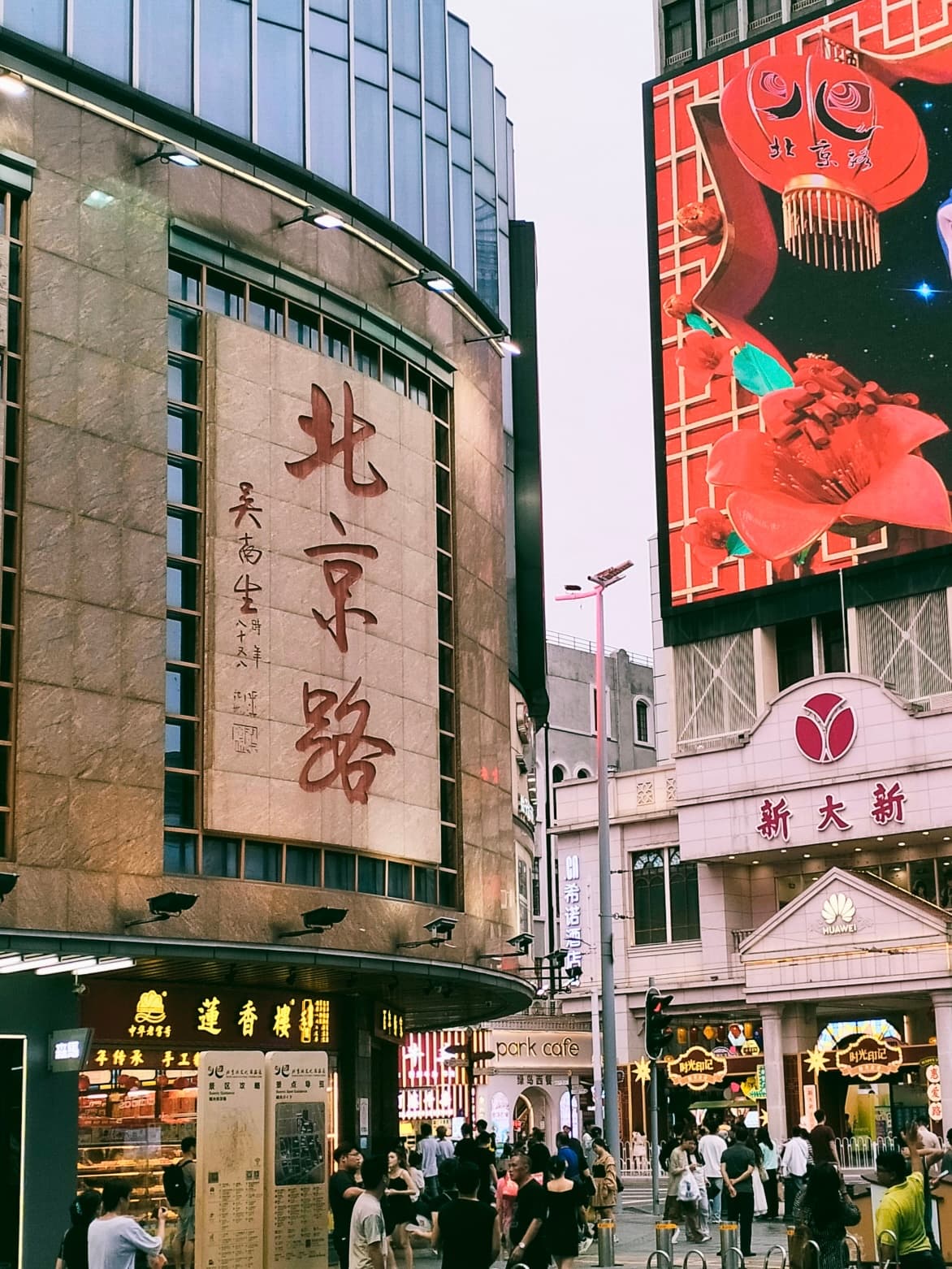
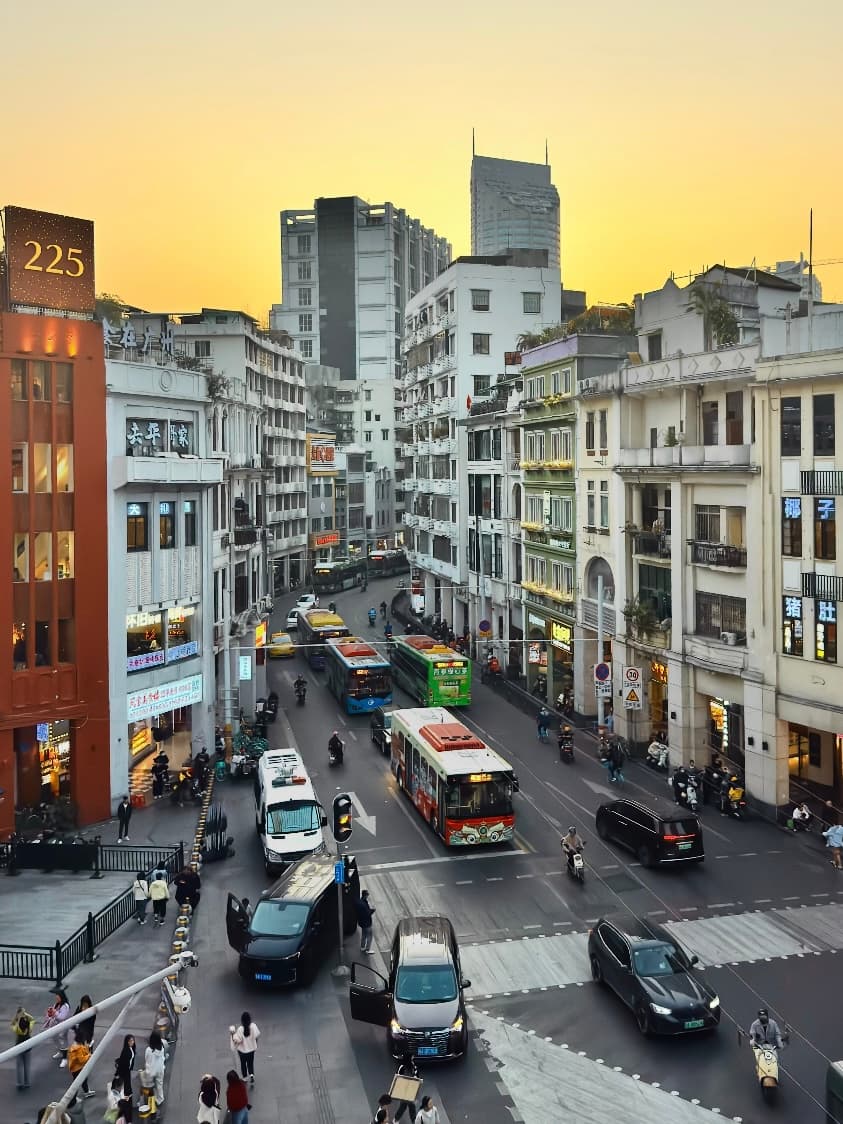
Beijing Road is one of the most famous streets in Guangzhou and one of the oldest commercial areas in the city. Located in Yuexiu District, the street has served as a central trade route for more than two thousand years.
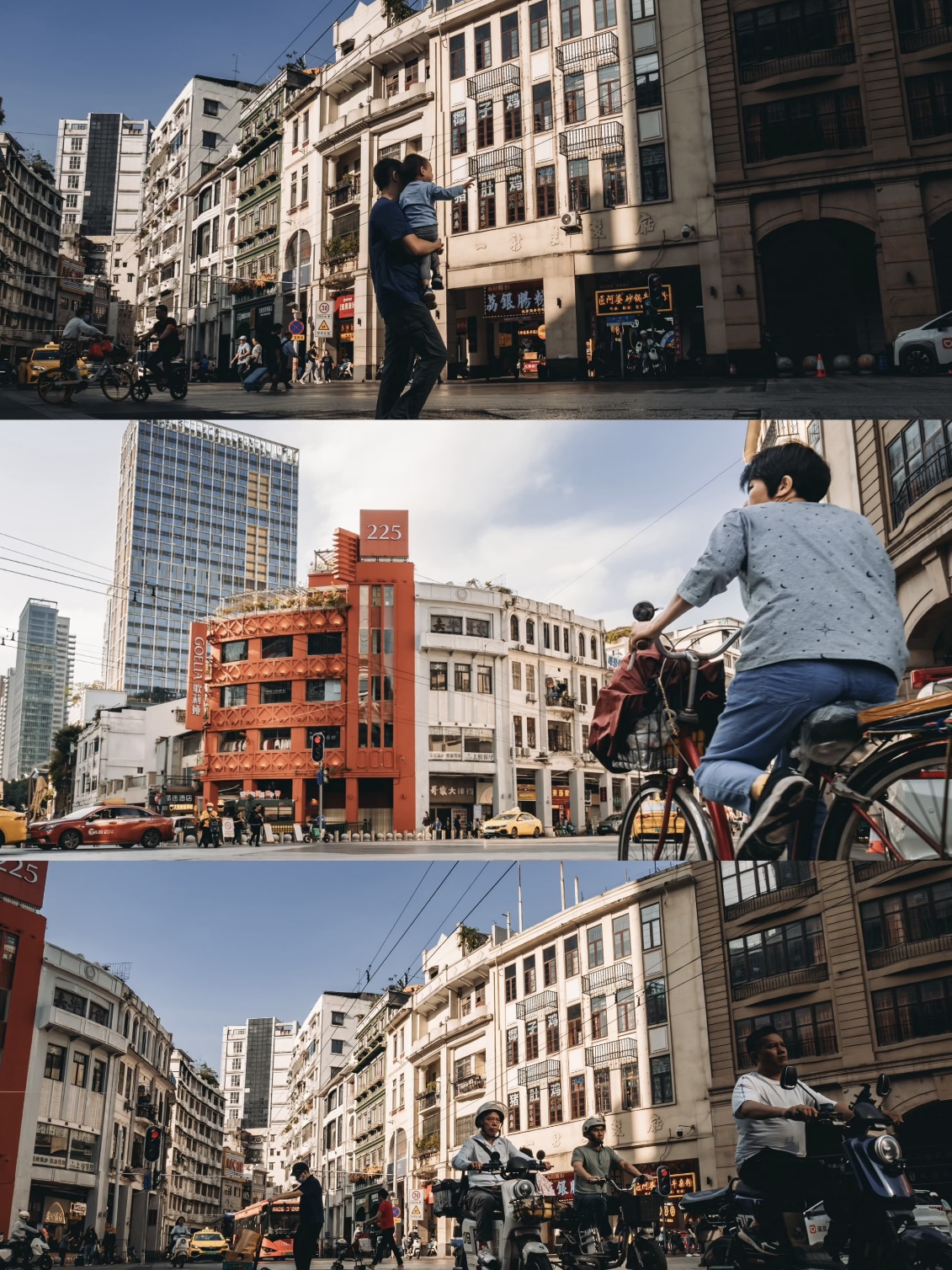
Today Beijing Road combines historic landmarks, shopping streets, restaurants, and night markets. Visitors walking along the pedestrian street can see ancient road remains beneath glass panels, traditional Lingnan style buildings, modern shopping centers, and famous local snack shops.
Because of this mix of history and daily life, Beijing Road is often considered the cultural and commercial heart of Guangzhou. It is one of the best places for travelers to understand how the old city connects with the modern metropolis.
During the daytime the area functions as a shopping district filled with department stores and retail shops. In the evening the street transforms into a lively pedestrian zone where visitors explore food stalls, street performances, and illuminated historic buildings.
This guide explains where Beijing Road is located, how to reach it, what to see in the area, and how to plan the best walking route through Guangzhou’s most famous pedestrian street.
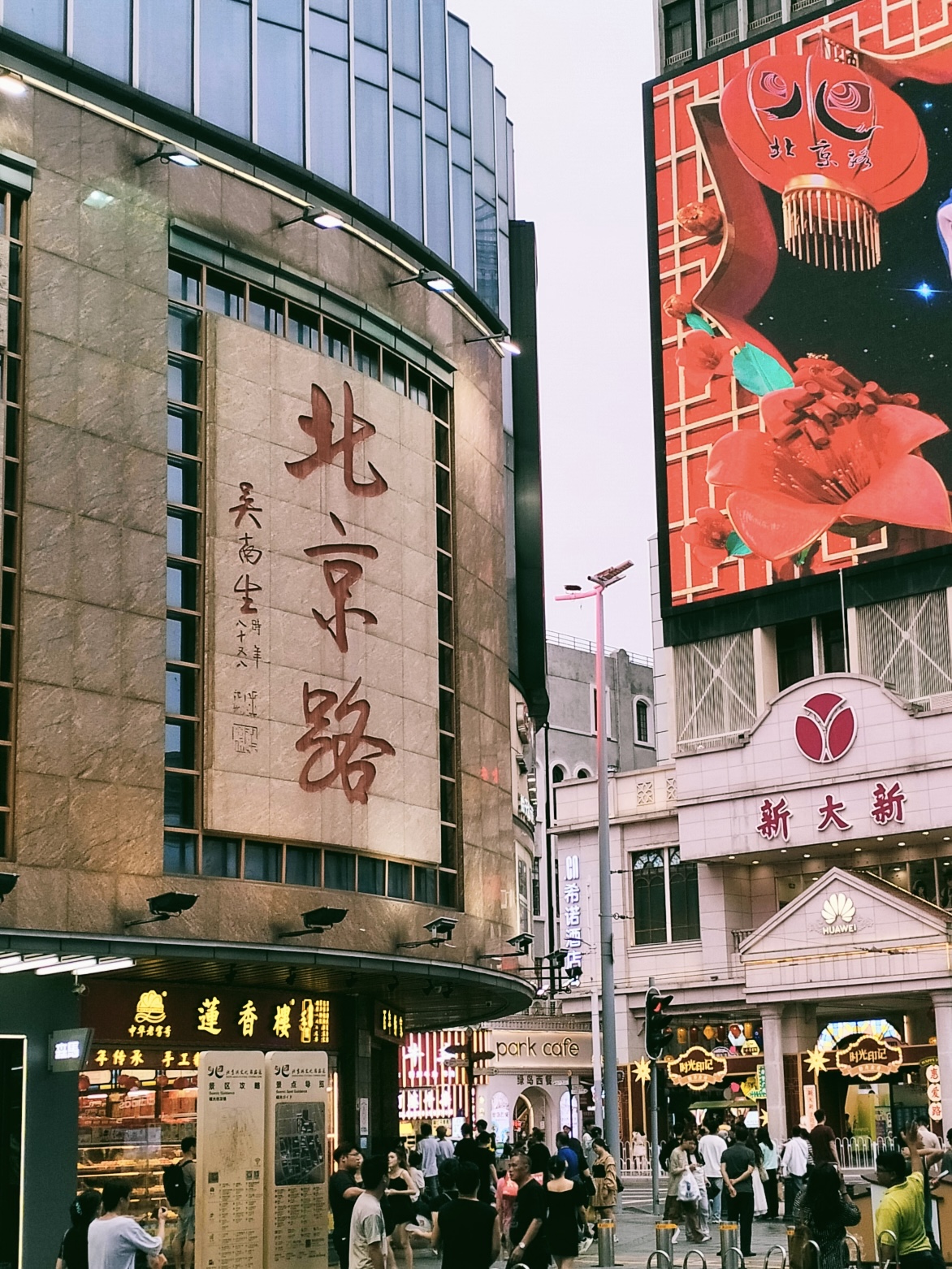
Where Beijing Road Is and How to Get There
Beijing Road is located in Yuexiu District in central Guangzhou. The area sits inside the historic core of the city and is surrounded by traditional neighborhoods, temples, and government buildings.
Because of its central location, the street is easy to reach from most parts of Guangzhou.
The best way to get there is by metro.
Beijing Road Metro Station
Guangzhou Metro Line 6 stops directly at Beijing Road Station.
From the station exit, visitors walk directly onto the pedestrian street. This makes it the most convenient metro option for reaching the area.
Gongyuanqian Station
Another nearby metro station is Gongyuanqian Station, which connects Guangzhou Metro Line 1 and Line 2.
From this station the walk to Beijing Road takes only a few minutes. Many visitors use this route when coming from other major districts in the city.
Opening Hours
Beijing Road is a pedestrian street rather than a single attraction, so it remains open throughout the day.
Most shops operate between late morning and late evening.
The busiest period usually occurs between 18:00 and 22:00 when the street lights turn on and crowds gather for shopping and dining.
Historic Highlights Along Beijing Road
One of the reasons Beijing Road is unique is the visible connection between modern life and ancient history.
Millennium Road Ruins
One of the most remarkable features of Beijing Road is the ancient road ruins preserved beneath glass panels in the middle of the street.
These archaeological remains show layers of road surfaces built during different historical periods.
Some sections of the road date back more than 2,000 years. Standing above the glass panels allows visitors to see how the city’s main street evolved across multiple dynasties.
This feature makes Beijing Road one of the few places in China where visitors can walk above ancient urban infrastructure.
Lingnan Arcade Buildings
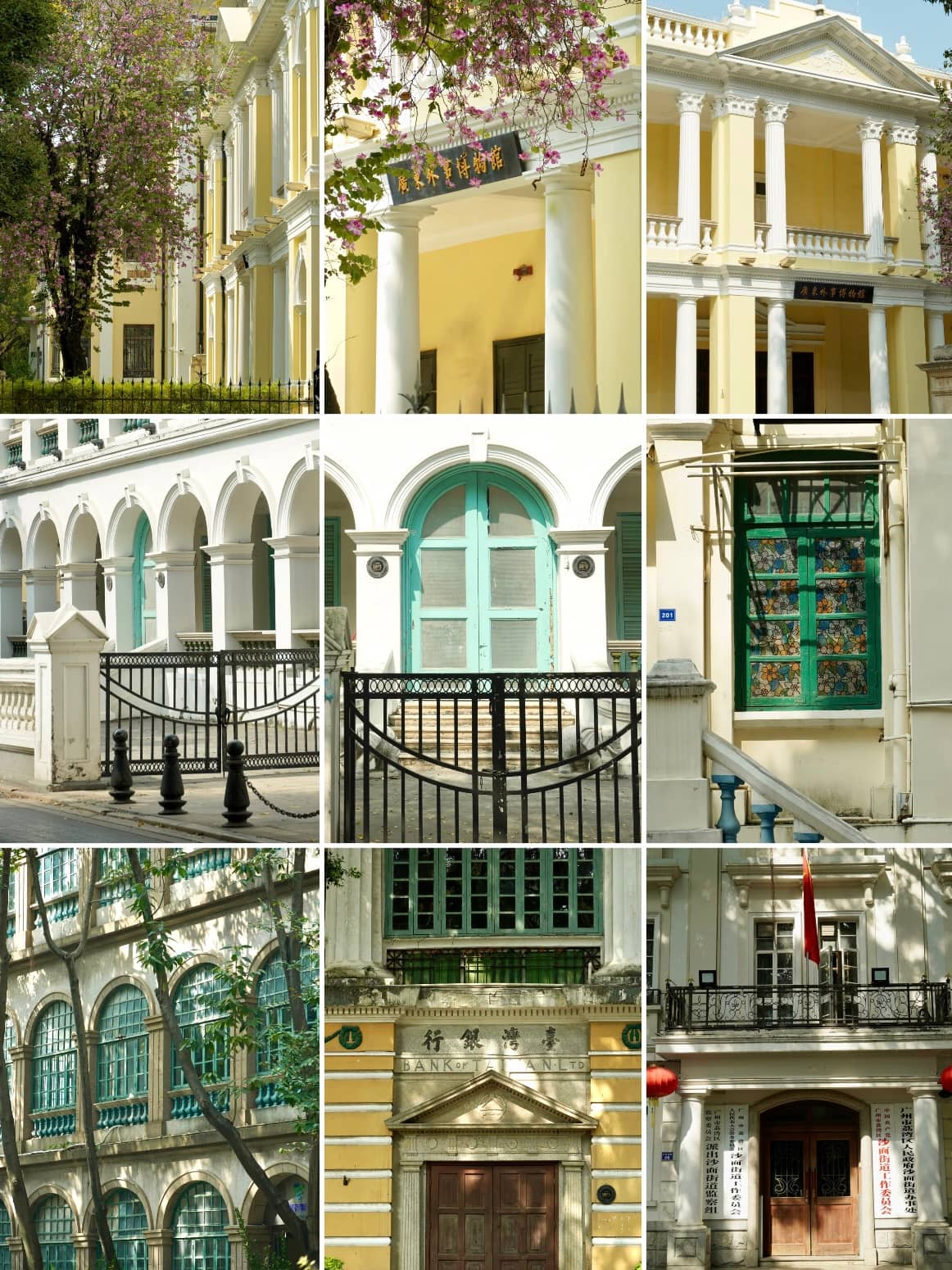
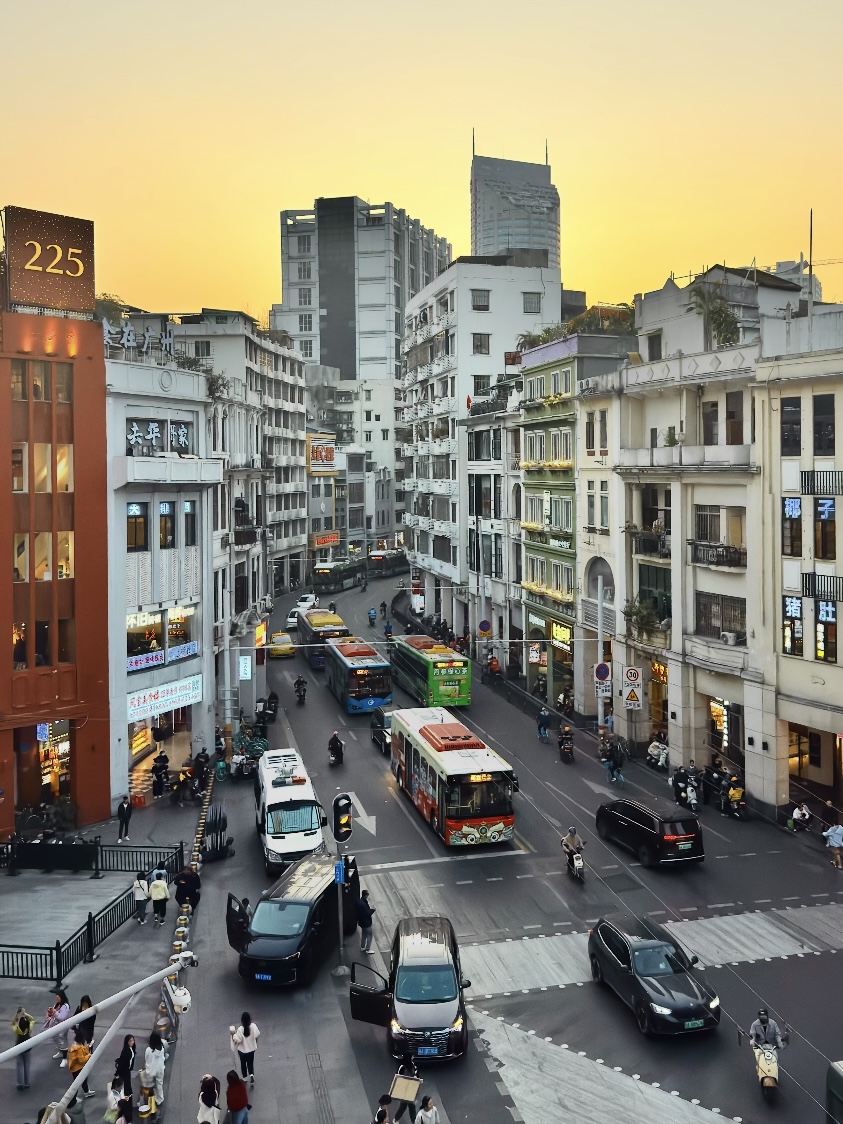
Many buildings along Beijing Road follow the traditional Lingnan arcade style known as qilou.
These buildings include covered walkways at street level that protect pedestrians from rain and strong sunlight.
The architectural style developed across southern China to adapt to the subtropical climate.
Walking beneath these arcades provides a good opportunity to observe traditional Cantonese urban architecture.
Tianhe Cinema
Tianhe Cinema is one of the older cultural venues along Beijing Road.
Although the surrounding area has modernized, the cinema reflects the long history of entertainment and public life on this street.
Dafosi Temple. The Most Famous Landmark Near Beijing Road
One of the most famous landmarks near Beijing Road is Dafosi Temple.
The temple stands only a short walk from the main pedestrian street and attracts many visitors, especially in the evening.
Dafosi is one of the oldest Buddhist temples in Guangzhou and has become famous online because of its dramatic nighttime appearance.
After sunset the temple buildings are illuminated with golden lights. The layered roofs and glowing halls create a scene that many visitors compare to settings from animated films.
Because of this visual atmosphere, the temple has become one of the most photographed places near Beijing Road.
Visitors often walk from the pedestrian street to the temple in the evening to see the illuminated architecture.
Recommended Walking Route in Beijing Road
Beijing Road is best explored as a short walking tour.
Most visitors start from Beijing Road Metro Station and walk along the main pedestrian street.
The first highlight is the Millennium Road Ruins. Visitors usually stop here to look through the glass panels at the ancient street remains.
From there continue walking through the shopping area where modern stores and historic buildings stand side by side.
Next walk toward the side streets leading to Dafosi Temple. Visiting the temple in the evening provides the best lighting for photography.
After exploring the temple return to Beijing Road to continue walking through the shopping district.
Many visitors finish their visit by stopping at local snack shops or restaurants along the street.
A typical visit to the area lasts about two to three hours depending on how long visitors spend shopping and exploring nearby attractions.
Tips for Visiting Beijing Road
Beijing Road becomes extremely busy during weekends and public holidays. Travelers who prefer a more relaxed atmosphere may consider visiting on weekday evenings.
The best time for photography is after sunset when shop signs and street lighting illuminate the pedestrian street.
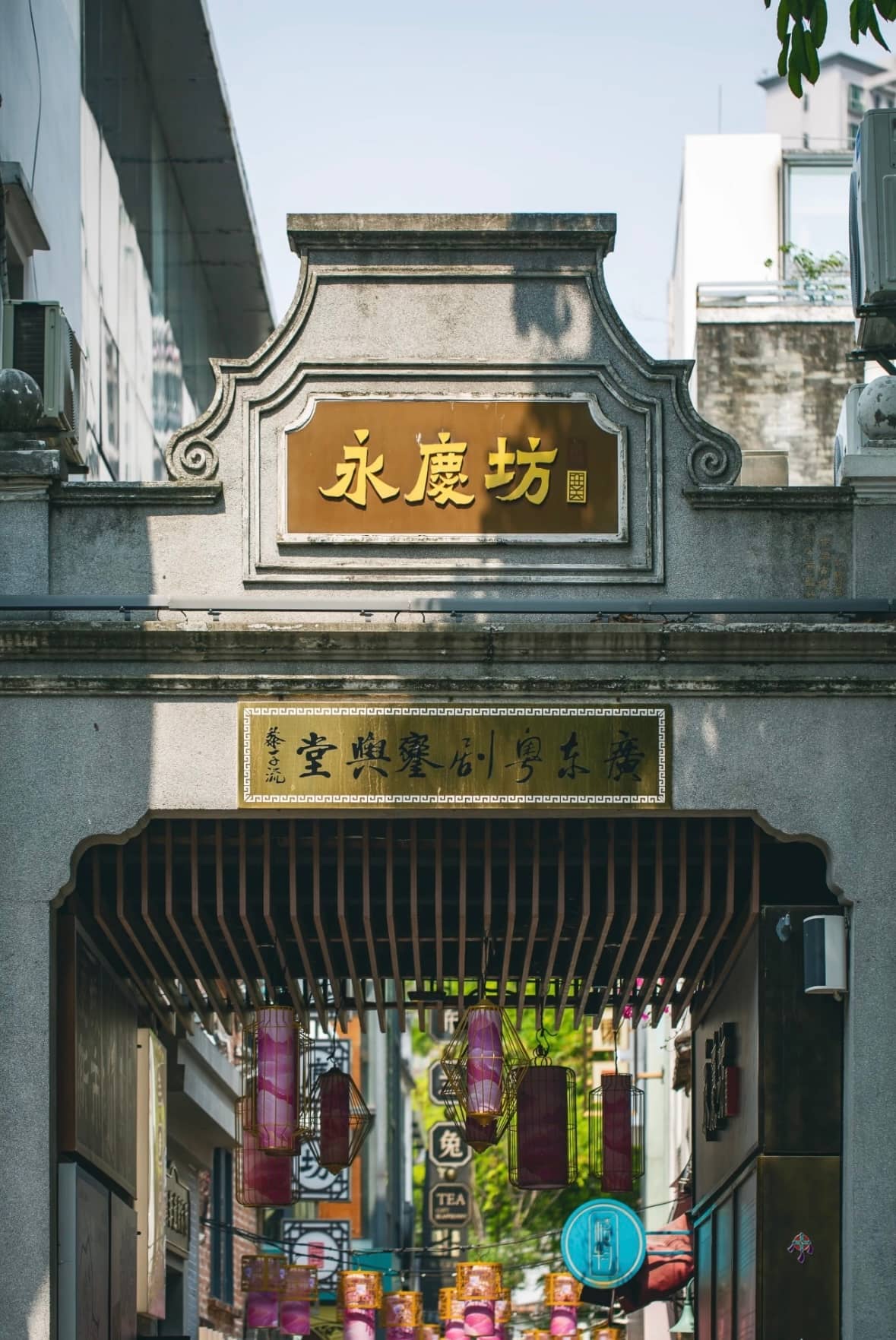
Because the area contains both modern shops and historic landmarks, visitors should take time to explore the smaller streets around the main pedestrian road.
Comfortable walking shoes are recommended since the entire area is explored on foot.
Why Beijing Road Is One of Guangzhou’s Most Important Streets
Beijing Road reflects the long history of Guangzhou as a commercial and cultural center.
For centuries merchants, travelers, and local residents have used this route as one of the main streets of the city.
Today the area continues to serve as a gathering place where people shop, eat, and explore the historic center of Guangzhou.
Few locations combine ancient archaeological remains, traditional architecture, and modern shopping streets in such a compact space.
For travelers visiting Guangzhou, Beijing Road offers one of the clearest views of how the city connects its long history with contemporary urban life.