Introduction
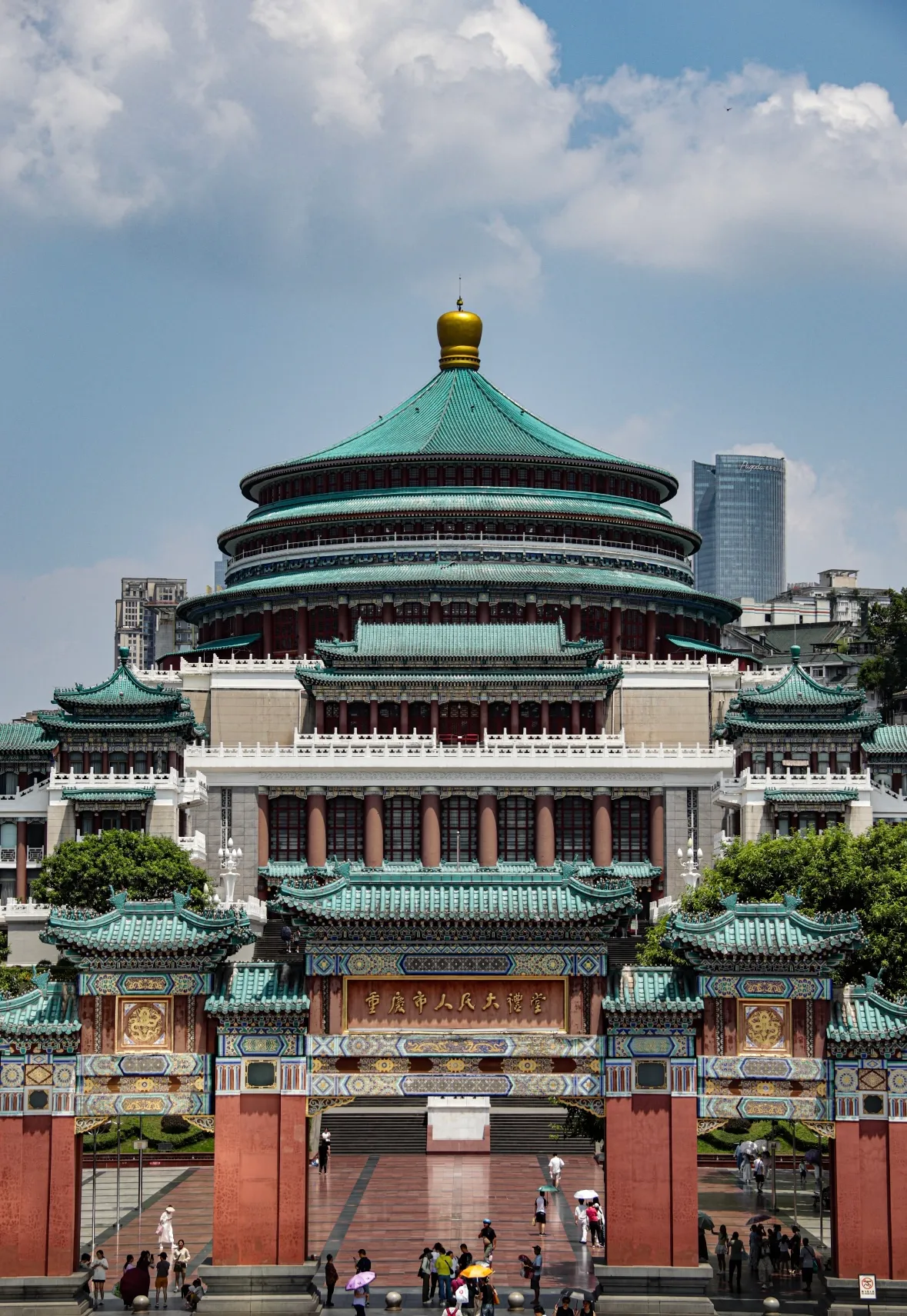
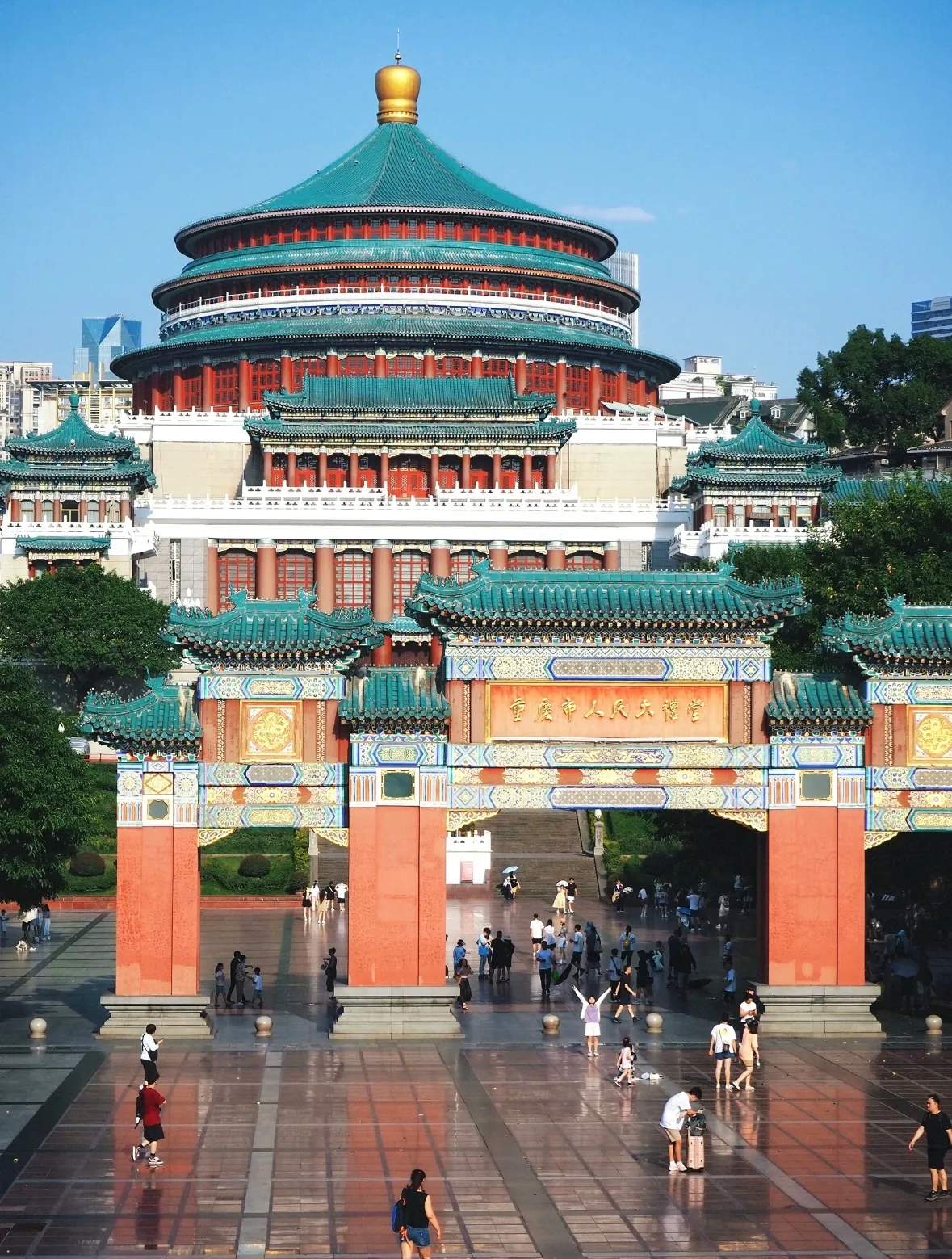
For anyone visiting Chongqing, one building immediately stands out against the modern skyline—the Chongqing Auditorium. Known officially as the People’s Auditorium of Chongqing (重庆人民大礼堂), this landmark combines traditional Chinese design with modern engineering and serves as a cultural and political hub. With its striking green dome, red walls, and massive scale, it is one of the most photographed attractions in the city.
For overseas visitors, the Chongqing Auditorium offers not only a glimpse into Chinese architecture but also a living connection to the city’s modern history. This guide will give you everything you need to know—basic travel tips, history, architecture highlights, and visiting advice—to make your trip worthwhile.
1.Basic Information and Practical Tips
The Chongqing Auditorium sits in Yuzhong District, a central area that also hosts several other cultural landmarks.
Address: No. 173 Renmin Road, Yuzhong District, Chongqing
Transport: The most convenient option is Metro Line 10, getting off at Auditorium Station (大礼堂站). From there, it’s less than a 5-minute walk.
Opening Hours: 08:00 – 18:00 (last ticket sale at 17:30)
Tickets: 8 RMB per person(If you want to get in). Foreign tourists must present their passports when buying tickets at the onsite counter.
The entrance leads to a vast public square. From here, you’ll walk up steps toward the main hall, which gives you the perfect angle for panoramic photos.
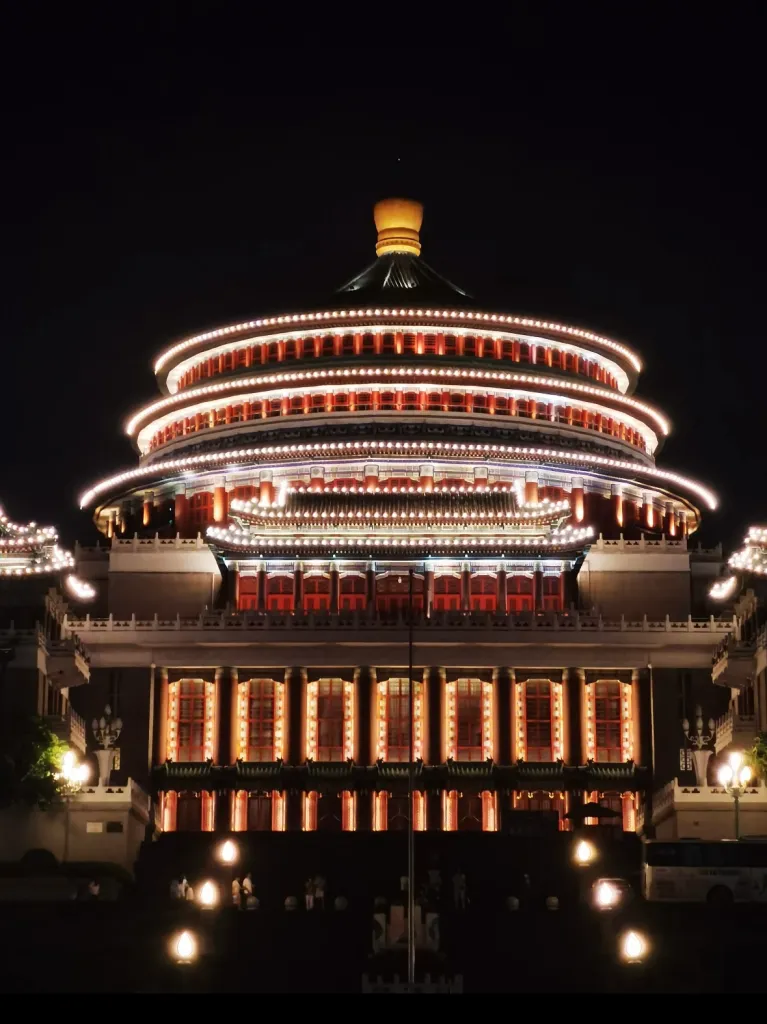
Travel Tip: Try to arrive before 4:30 PM to ensure you have enough time to explore the interior before the ticket window closes. In the evening, the building is beautifully lit, making it a favorite nighttime photography spot.
2.Historical Background of Chongqing Auditorium
The origins of the Chongqing Auditorium date back to a key period in modern Chinese history.
Construction: In 1950, Chongqing became the administrative hub for the Southwest region. To meet the demand for large-scale conferences, education campaigns, and public gatherings, the government launched the construction of a grand auditorium in 1951.
Completion: By April 1954, the building was finished and named the “Southwest Administrative Committee Auditorium.” Two years later, in 1956, it was renamed the People’s Auditorium of Chongqing, the title it still holds today.
Over the decades, the auditorium has hosted political meetings, cultural festivals, music performances, and community events. For many locals, it symbolizes the city’s resilience and cultural spirit during China’s early development years.
Why this matters for visitors: Knowing the background allows tourists to see beyond the red walls and green dome—it is a landmark that reflects Chongqing’s identity and growth after World War II and the founding of the People’s Republic of China.
3.Architectural Features and Cultural Significance
Fusion of Styles
Chinese Palace Aesthetics: The layout follows the style of Ming and Qing dynasty palaces, with a symmetrical axis, tiered roofs, and bright red-and-green contrasts.
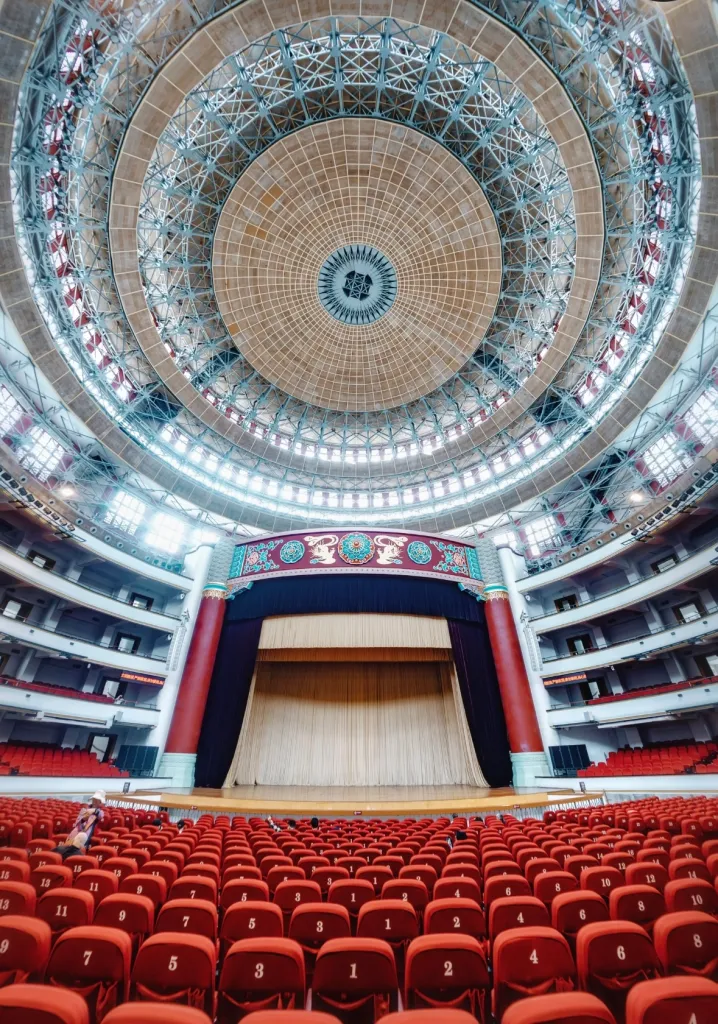
Western Influence: The auditorium also adopts Western structural techniques, most notably in its grand dome, which allows for a vast indoor space without supporting pillars.
Impressive Scale
Total area: 33,600 m²
Height: 65 meters (main structure 55 m)
Central Hall: Diameter of 46.33 m
Seating Capacity: 3,388 seats, making it one of the largest auditoriums in China
Standing in front of the building, many foreign visitors compare it to Beijing’s Temple of Heaven, though the Chongqing version is unique in its mix of regional architecture and modern engineering.
Cultural Value
One of Chongqing’s Top 10 Cultural Symbols
A landmark of local memory, where generations have celebrated important events
A popular venue for performances and cultural exchanges
For overseas tourists, visiting the Chongqing Auditorium is like stepping into a living museum of architecture and culture.
4.Visiting Experience: What to Expect and How to Enjoy It
Best Times to Visit
Morning: Clear skies and softer crowds, ideal for photography
Afternoon: Explore the interior before the last ticket sales at 17:30
Evening: The auditorium lights up after sunset, creating a stunning night view
Things to Do
1.Photography – Take pictures from the square, the steps, and different angles around the dome.
2.Interior Visit – Step inside to admire the central hall. If you’re lucky, you may catch a rehearsal or performance.
3.Combine with Nearby Attractions:
Three Gorges Museum (right across the square, free entry, excellent for history lovers)
Jiefangbei Pedestrian Street (10–15 minutes by car, great for shopping and dining)
Hongya Cave (a must-see at night, about 15 minutes by taxi)
Traveler Tips
Bring your passport to purchase tickets.
Allow at least 1–1.5 hours to explore both the auditorium and its square.
If traveling with children or elderly visitors, note that the steps may be tiring—wear comfortable shoes.
For night photography, use a tripod or a smartphone with night mode.